The short answer
- A transport chair is generally designed to be pushed by another person.
- A standard wheelchair usually has large rear wheels with hand rims that may allow self propulsion.
- Compare fit, overall width, weight capacity, product weight, brakes and folded size before choosing.
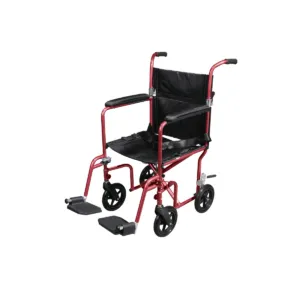
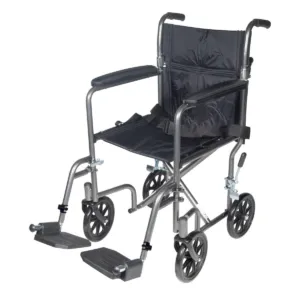
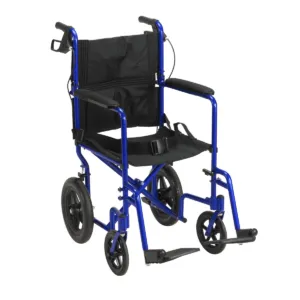
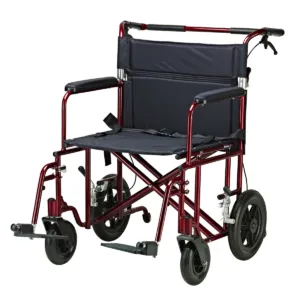
A transport chair and a standard wheelchair can look similar, but they are built for different kinds of use. The easiest way to tell them apart is to look at the rear wheels. A standard wheelchair usually has large rear wheels with hand rims. A transport chair usually has smaller rear wheels and is designed to be pushed by another person.
The right choice depends on who will move the chair, how far it will be used, where it will travel and how often someone has to lift or store it. If the person needs a chair because of a change in walking ability or has complex seating needs, ask a doctor, physical therapist or occupational therapist which type is appropriate.
Can the person push a transport chair by themselves?
Transport chairs are generally designed for an attendant to push from behind. Their small rear wheels do not provide the large hand rims commonly used for self propulsion on a standard wheelchair.
If independent propulsion is important, compare standard wheelchairs that are designed for that purpose. The user still needs enough reach, strength and control to use the hand rims safely, so personal ability should be discussed with a clinician when there is any uncertainty.
Can a caregiver push a standard wheelchair?
Yes. Standard wheelchairs usually have push handles, so a caregiver can push them. The larger rear wheels change the size, weight and handling compared with many transport chairs, but caregiver use is common.
Think about the route. Tight indoor turns, ramps, thresholds and outdoor surfaces all affect how a chair feels to push. Check the product instructions and specifications for the environments where it is intended to be used.
Which type is easier to put in a car?
Transport chairs are often chosen because they can be lighter and more compact than many standard wheelchairs. That can make them easier to fold, lift and place in a vehicle. However, product weights and folded sizes vary, so compare the actual specifications rather than assuming every transport chair is light.
Also check which parts remove or swing away. Footrests may be removable on some chairs, which can reduce the size of the piece being lifted. Make sure the person doing the lifting can manage the chair comfortably. If lifting is difficult, another transport plan may be needed.
Which chair is better for longer periods of sitting?
That depends on the individual chair and the person’s seating needs. Do not use the label alone to decide. Compare seat width, seat depth, seat height, back support, armrests, footrests and any cushion that will be used.
Transport chairs are often selected for moving a person from one place to another with an attendant. A standard wheelchair may offer more options for regular mobility and self propulsion. For someone who spends long periods seated or needs special positioning, a clinician should help with the seating plan.
How do you measure for either chair?
Start with the person seated upright on a firm, level surface. Measure across the widest part of the hips or thighs for seat width. Measure from the back of the buttocks toward the back of the knee for seat depth. Check lower leg length and normal footwear when comparing seat height and footrest position.
Use those measurements with the manufacturer’s fitting guidance. Then compare the chair’s overall width with doorways and hallways. The seat width is only the inside seating space. It is not the total outside width of the chair.
Does weight capacity differ?
Both transport chairs and standard wheelchairs are sold with specific weight capacities. Check the listed capacity for the exact chair and make sure the user’s weight is within it. Do not guess capacity from the chair’s size, wheel size or appearance.
If a higher capacity is needed, compare wheelchairs designed and rated for that use. A wider seat does not automatically mean the frame has a higher capacity.
What about brakes?
Brake arrangements vary. Standard wheelchairs often have wheel locks near the large rear wheels. Transport chairs may have wheel locks, attendant operated brakes or both, depending on the design. Read the product instructions so the caregiver knows how to slow, stop and secure the chair as intended.
Wheel locks are not all designed to work as moving brakes. Their purpose and operation depend on the chair. Do not assume a control works like a bicycle brake unless the instructions say it does.
What should you check for use outside the home?
Look at the surfaces and distances involved. Smooth indoor floors and paved entrances are different from rough sidewalks, gravel or grass. Wheel size, tire type and frame design can affect how easily an attendant can push the chair.
Check ramps, curb cuts and vehicle access as part of the plan. If the chair will be used in a particular building, measure entrances and elevators. A portable chair is only useful if it fits the route and the caregiver can handle it.
What mistakes are common?
- Buying a transport chair for someone who expects to propel the chair independently.
- Assuming every transport chair is lighter than every standard wheelchair.
- Choosing by seat width without checking the chair’s overall width.
- Ignoring who will lift the chair into a vehicle.
- Assuming the brake controls work the same on every chair.
- Using the chair for long periods without checking whether the seating setup fits the person’s needs.
What should you compare before buying?
Compare who will propel the chair, seat dimensions, overall width, weight capacity, product weight and folded size. Check wheel design, brakes, armrests, footrests and any removable parts. Match those details to the user, the caregiver and the places the chair will go.
If you are unsure whether a transport chair or wheelchair fits your needs, call an Avante Shop specialist for help.
Questions people ask
Can a transport chair replace a standard wheelchair?
They serve different needs. A transport chair is generally designed for attendant pushing, while a standard wheelchair may also support self propulsion when appropriate.
Are transport chairs always lighter?
No. Many are built with portability in mind, but weights vary. Compare the listed product weight and folded size for the exact chair.
Can a caregiver push a regular wheelchair?
Yes, standard wheelchairs usually have push handles for caregiver use. The larger rear wheels can make their size and handling different from a transport chair.
What measurements should I take before ordering either type?
Measure for seat width, seat depth and lower leg fit, then measure the home for doorways and turning space. Compare those measurements with the product's fitting information and overall dimensions.
Do transport chairs and wheelchairs use the same brakes?
Not always. Brake and wheel lock designs vary, so read the product instructions and check which controls the chair includes.
This guide is general product information, not medical advice. If you are unsure what is right, speak to your doctor, nurse or therapist.