The short answer
- Choose a cane style based on the amount of support and hand comfort needed.
- A common starting height is near the wrist crease when standing naturally.
- Check that every height button or locking collar is fully secure before use.
A cane looks simple, but the handle, base, height and tip all affect how it feels to use. The right cane should fit the person’s hand, adjust to an appropriate height and provide the type of support a clinician has recommended.
A cane is not the right mobility aid for every walking problem. If the person is unsure whether a cane provides enough support, ask a doctor, physical therapist or occupational therapist before choosing.
What kinds of canes are available?
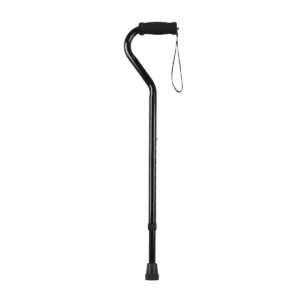
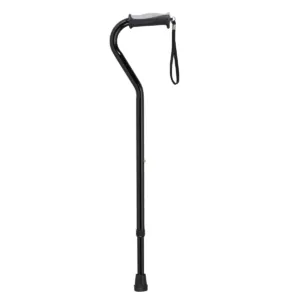
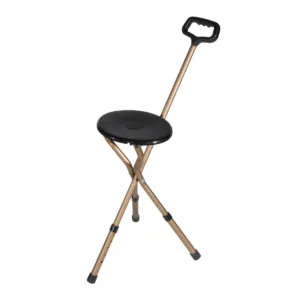
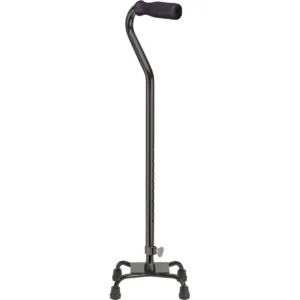
Straight canes usually have a single tip and a simple handle. Offset canes place the handle over the shaft in a way that can feel different when weight is placed through the hand. Folding canes collapse into sections for storage. Quad canes have a base with several feet instead of one tip.
Each style changes how the cane feels and how much floor space it uses. Start with the type of support the person needs, then compare convenience features.
How do you choose a cane handle?
The handle should feel comfortable in the user’s hand and allow a secure grip. Different shapes distribute pressure differently across the palm and fingers.
If the person has limited hand strength, pain or difficulty closing the fingers around a grip, ask a therapist which handle style may be appropriate. Do not choose only by appearance.
How do you check cane height?
Wear the shoes normally used while walking. Stand naturally with the arm relaxed at the side. A common starting point is to adjust the top of the cane handle near the crease of the wrist.
When the hand rests on the handle, the elbow should have a small, comfortable bend. The shoulder should remain relaxed. The person should not need to raise the shoulder or lean far to one side to reach the cane.
This is a general fitting method. Personal posture, arm length and walking pattern may change the correct setting, so follow any instructions provided by a clinician.
How do you adjust an adjustable cane?
Many canes use a spring button that fits into a series of holes. Some also have a locking collar. Follow the product instructions for the exact adjustment system.
- Stand the cane upright on a level surface.
- Release the adjustment mechanism.
- Move the shaft to the required height.
- Make sure the button fully enters the selected hole.
- Tighten any locking collar as directed.
- Press gently on the handle before use to confirm that the shaft does not slip.
Never use a cane with a partially engaged button or loose locking mechanism.
What should you know about cane tips?
The rubber tip is the part that contacts the floor on a single point cane. It should sit securely on the shaft and have enough tread to contact the surface properly.
Check the tip regularly for wear, cracking, hardening or uneven edges. Replace it with a compatible tip when the product instructions indicate replacement is needed. A tip that no longer sits flat can change how the cane feels against the floor.
What is different about a quad cane?
A quad cane has several feet arranged on a small or larger base. The base can stand on the floor without being held, although stability still depends on placing all feet correctly.
A quad base takes up more floor space than a single tip. This can matter around stairs, furniture and narrow walking areas. Small and large bases also feel different, so the person’s support needs and home layout should both be considered.
Does a folding cane work differently?
A folding cane is designed to separate into connected sections so it can be stored in a smaller space. Before each use, make sure every section is fully seated and aligned.
Do not use the cane if a joint looks damaged, loose or unable to lock into its normal position. Folding convenience should not replace fit or condition checks.
What mistakes are common?
- Setting the cane while wearing different shoes from normal use.
- Choosing height by waist level instead of checking arm position.
- Using a cane with a worn or loose tip.
- Leaving an adjustment button partly engaged.
- Choosing a larger base without considering floor space.
- Using a cane when more support has been recommended.
What should you check before buying?
Check the cane’s height adjustment range, weight capacity, handle style, tip or base design and product weight. If portability matters, check folded size and how the sections lock together.
Most importantly, match the cane to the level of support recommended for the person. A convenient cane is only useful when it is also appropriate for the way the person walks.
If you are unsure which cane style or height is right, call an Avante Shop specialist for help.
Questions people ask
Where should a cane handle reach?
The wrist crease is a common starting point when standing naturally with the arm relaxed. Individual fitting needs can differ.
How much should my elbow bend?
The elbow should have a small, comfortable bend rather than being locked straight or sharply bent. A therapist can check the fit if you are unsure.
When should a cane tip be replaced?
Replace it when it is worn, cracked, hardened or no longer sits properly on the floor. Use a compatible replacement.
Is a folding cane as easy to fit as a regular cane?
It still needs the correct height and a secure grip. Check that every folding section is completely seated before use.
This guide is general product information, not medical advice. If you are unsure what is right, speak to your doctor, nurse or therapist.