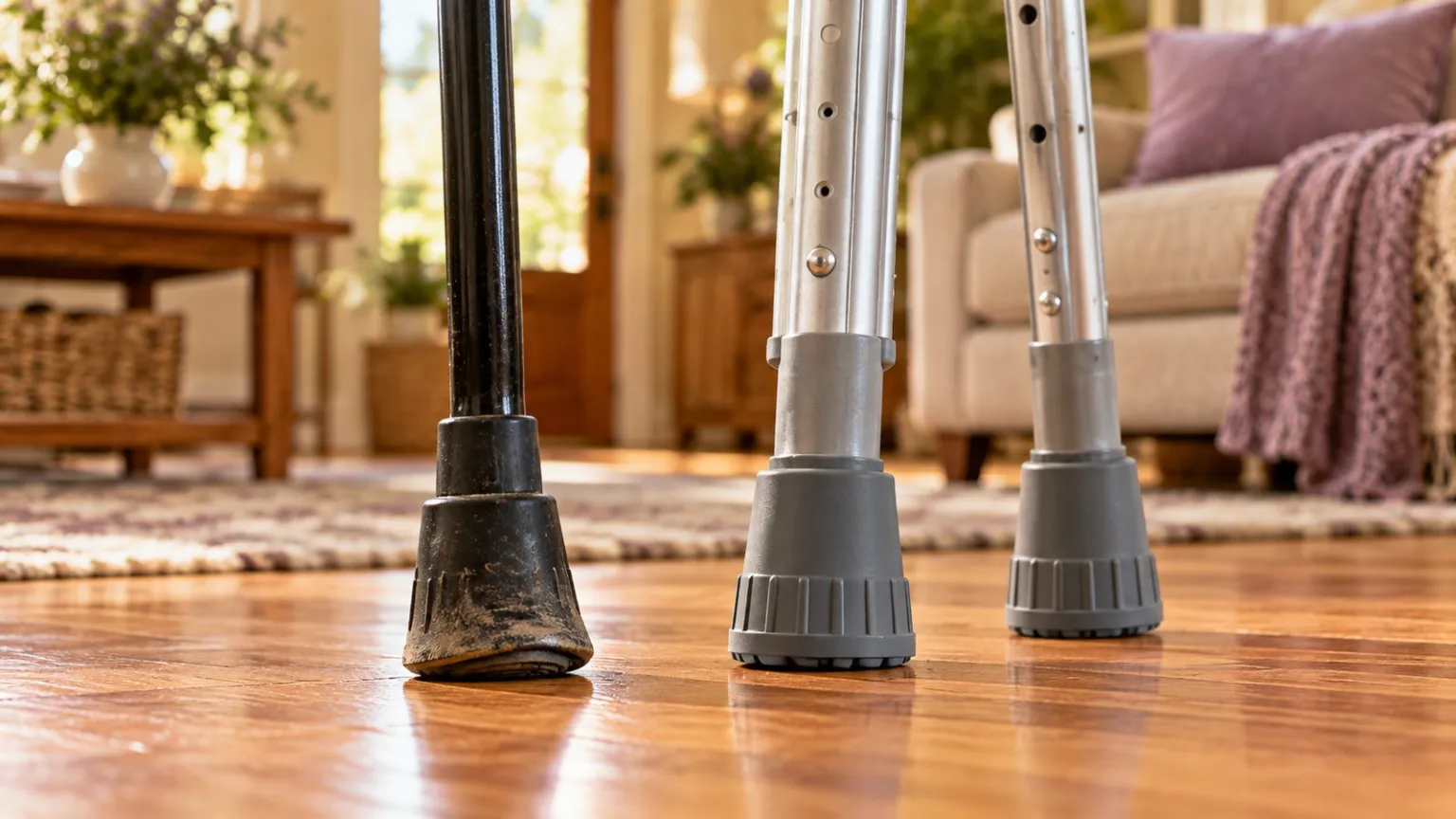
The short answer
- Inspect tips for worn tread, cracks, hardening and uneven wear.
- Replace a tip that no longer sits securely or contacts the floor properly.
- Match replacement tips to the shaft size and equipment type.
The rubber tip at the bottom of a cane or crutch is the part that repeatedly contacts the floor. It can wear gradually, so the change is not always obvious from one day to the next.
A quick inspection can help identify a tip that is damaged, loose or worn unevenly. Replacement should use a compatible part that fits the cane or crutch correctly.
What does a cane or crutch tip do?
The tip provides the contact surface between the mobility aid and the floor. Its shape and material are designed to work with the shaft and allow the equipment to sit on the surface as intended.
It is a replaceable wear part on many canes and crutches. The exact design varies, so use the size and type specified for the equipment.
What signs of wear should you look for?
Look at the bottom tread. If the pattern has become very smooth, worn through or uneven from one side to the other, replacement may be needed.
Check the sides for cracks, splitting or pieces of rubber coming away. A tip that has become hard or misshapen may also stop sitting on the floor as designed.
If the tip twists, slips off the shaft or feels loose, stop and check whether it is the correct size and properly installed.
How often should you inspect the tips?
There is no single inspection schedule that fits every user because wear depends on how often the cane or crutches are used and the surfaces they contact.
Make a quick look at the tips part of normal equipment checks. Someone who uses crutches throughout the day or often walks outdoors may notice wear sooner than someone who uses a cane only for short indoor distances.
Why can one side wear faster?
Wear can be uneven because of the person’s walking pattern, the angle at which the cane or crutch reaches the floor, or the types of surfaces used.
On a pair of crutches, inspect both tips even if only one looks damaged. On a quad cane, check every foot individually.
If tips continue to wear very unevenly, a physical therapist can check the equipment fit and how it is being placed.
How do you choose the correct replacement?
Replacement tips need to fit the shaft securely. Measure or check the equipment information for the required tip size and type.
Do not assume that tips with a similar appearance are interchangeable. A loose tip or one that does not slide fully onto the shaft may not work as intended.
Use parts listed as compatible with the cane or crutch whenever possible.
How do you install a replacement tip?
Follow the instructions for the specific tip. The old tip usually needs to be removed completely before the replacement is pushed onto the shaft.
Make sure the new tip is fully seated and straight. It should not wobble, rotate loosely or pull off with light hand pressure.
After installation, place the cane or crutch on a level floor and check that the tip sits evenly.
What about quad cane tips?
A quad cane has several feet, so all of them should be inspected. One worn tip can cause the base to sit unevenly.
When replacing tips, check whether the manufacturer recommends replacing individual feet or a complete matching set. Use compatible parts of the correct size.
Can different tips change how a cane feels?
Yes. Some replacement designs have different shapes, tread patterns or flexibility. Changing the contact design can change how the cane feels against the floor.
If the user wants to change from the original tip style to a different type, check compatibility and ask a mobility specialist if the change may affect the way the cane is used.
What mistakes are common?
- Waiting until the rubber has worn through completely.
- Checking only the bottom and missing cracks along the side.
- Installing a tip that is too large or too small.
- Using a tip that does not sit fully on the shaft.
- Replacing only one worn crutch tip without inspecting the other.
- Ignoring uneven wear that keeps returning.
What else should you inspect?
While checking the tips, look at the rest of the mobility aid. Make sure height adjustment buttons are fully engaged, handgrips are secure and shafts are not visibly damaged.
For crutches, inspect underarm pads or forearm cuffs as applicable. Small maintenance checks can be done together rather than waiting for several parts to wear at once.
If you are unsure which replacement tip fits your cane or crutch, call an Avante Shop specialist for help.
Questions people ask
Can I keep using a cane if the tread is worn smooth?
A worn tip should be replaced with a compatible part. Check the rest of the tip for cracking or looseness as well.
Are cane and crutch tips universal?
No. Shaft sizes and tip designs vary. Check the required size and compatibility.
Should both crutch tips be replaced together?
Inspect both. Follow the equipment or replacement part instructions if they recommend matched replacement.
Why is one side of my tip wearing faster?
Uneven contact or the way the mobility aid is placed can contribute. A therapist can check fit and use if uneven wear keeps returning.
This guide is general product information, not medical advice. If you are unsure what is right, speak to your doctor, nurse or therapist.