The short answer
- Use a knee walker only when a clinician says it is suitable for your situation.
- Check knee pad height, handle height, brakes and steering before use.
- Measure doorways and consider thresholds, rugs and outdoor surfaces.
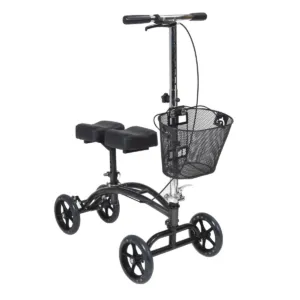
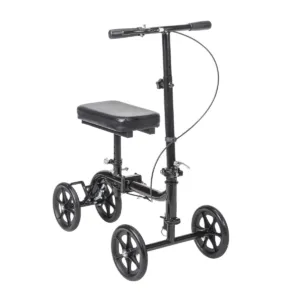
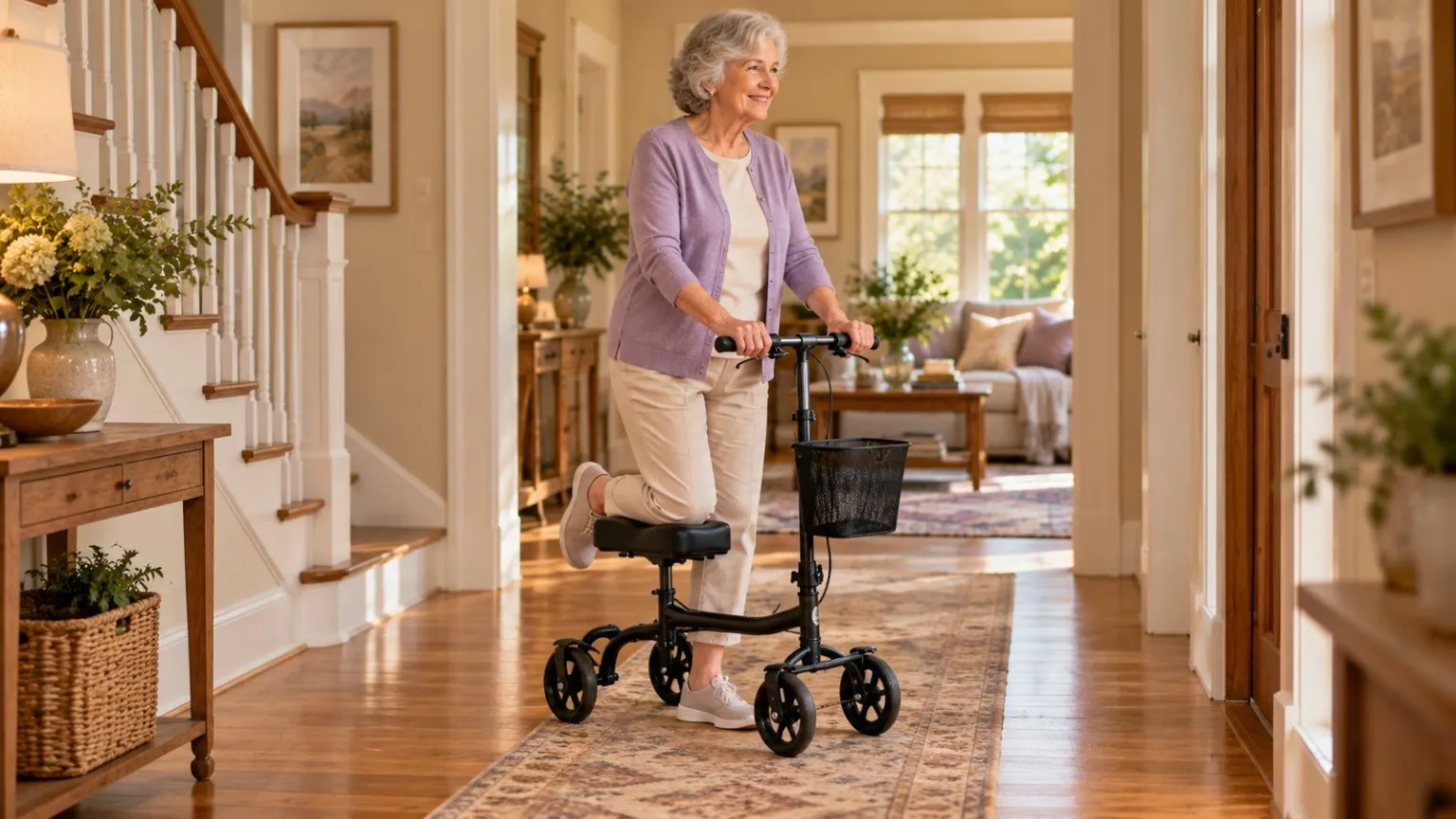
A knee walker is a wheeled mobility device with handlebars and a padded platform for one lower leg. The user rests the supported leg on the pad and moves with the other leg while holding the handlebars.
It is not suitable for every injury, procedure or mobility problem. A doctor or physical therapist should decide whether a knee walker is appropriate and explain how the affected leg should be positioned.
How does a knee walker work?
The device usually has several wheels, handlebars, hand brakes and a padded knee platform. The user steers from the handlebars while the supported leg remains on the pad as instructed.
Unlike crutches, the device stays on the floor and rolls. This means the user does not have to lift a pair of crutches with every movement, but the person does need enough balance, hand control and strength to steer and brake the walker.
What should you check about the knee pad?
The knee platform should adjust to a height that allows the user to stand in the position recommended by the clinician. It should not force the person to lean sharply to one side or reach down toward the handlebars.
Platform size and shape vary. Check that the leg can rest on it as directed without slipping off the edge. Some designs allow the pad to be set for right or left leg use.
How high should the handlebars be?
Handlebars should allow the person to stand comfortably with the shoulders relaxed and the elbows slightly bent. The user should not need to hunch over the device or raise the shoulders to reach the grips.
Handle height and knee pad height work together, so both should be checked after adjustment. Follow the manufacturer’s instructions and any fitting directions from the person’s therapist.
Why are brakes important?
A knee walker rolls freely, so brake control is a major part of using it. The person should be able to reach and squeeze the brake levers without shifting the hands into an awkward position.
Some models also have a parking brake or brake lock. Learn how it operates before the device is used. Apply the brake as directed whenever the instructions require the walker to stay still.
What should you know about steering?
Knee walkers do not all turn the same way. Some have steering front wheels, while others have a different turning design. Practice should follow the instructions provided with the device and any guidance from a clinician.
Tight turns can require more space than expected. Measure hallways and rooms where the knee walker will be used.
Will it work in your home?
Look at the normal path from the bedroom to the bathroom, kitchen and entrance. Check narrow doors, furniture, rugs and thresholds. A small raised edge can feel different on a wheeled device than on foot.
Keep the walking path as clear as practical. Avoid adding bags or objects in places that interfere with steering or brakes.
What about outdoor surfaces?
Smooth pavement is different from gravel, grass, broken sidewalks or steep surfaces. Check the manufacturer’s intended use and wheel design.
Do not assume that larger looking wheels make every surface suitable. If outdoor use is important, ask a mobility specialist whether the device fits the places the person needs to go.
Can a knee walker be folded for a car?
Many designs fold or partially collapse for transport, but the method varies. Check folded dimensions, product weight and whether the knee platform or basket must be repositioned.
Make sure every folding latch is fully locked again before use. A device that folds easily is still only useful if the person transporting it can lift it comfortably.
What mistakes are common?
- Using a knee walker without confirming that it is appropriate for the person’s situation.
- Adjusting only the handlebars and ignoring knee pad height.
- Using the device before learning the brake controls.
- Turning sharply in a space that is too narrow.
- Assuming every outdoor surface is suitable.
- Leaving a folding latch partly open after transport.
What should you check before buying?
Compare the user’s height with the handle and knee pad adjustment ranges. Check weight capacity, wheel design, brake type, overall width, folded size and product weight.
Also check which leg the platform can support and whether any included storage interferes with the way the device will be used.
If you are unsure whether a knee walker fits your situation, call an Avante Shop specialist for help.
Questions people ask
Can anyone use a knee walker instead of crutches?
No. Whether it is appropriate depends on the person's condition and mobility instructions. Ask the doctor or physical therapist involved in the person's care.
Does the knee pad height adjust?
Many knee walkers have an adjustable platform, but ranges vary. Check the exact product specifications.
Can a knee walker go over rugs?
Surface changes can affect how the wheels move. Check the manufacturer's instructions and the condition of the actual route.
Are knee walkers foldable?
Many are designed to fold or collapse for transport, but folded size and method vary by product.
This guide is general product information, not medical advice. If you are unsure what is right, speak to your doctor, nurse or therapist.