The short answer
- A posterior walker sits behind the child while the child holds the side or forward handles.
- Size and adjustment should be set by the child's physical therapist.
- Check growth range, brakes, wheels and accessories before choosing.
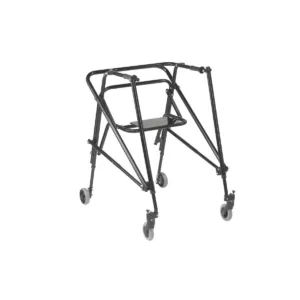
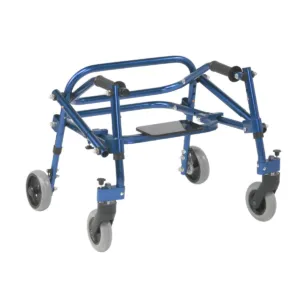
A posterior walker is a pediatric mobility device positioned behind the child while the child walks. It is different from a traditional walker that stays in front of the body.
Children who use gait equipment have individual movement and positioning needs. A pediatric physical therapist should decide whether a posterior walker is appropriate and should help with fitting and adjustment.
How does a posterior walker work?
The frame is positioned behind the child while the child holds the handles. The wheels and frame move with the child as they walk.
Designs vary in wheel configuration, braking, handle style and accessories. Some are simple frames, while others accept supports for specific positioning needs.
Why is professional fitting important?
Children grow and their movement patterns change. Handle height, frame size and accessory position need to match the child’s current body size and therapy plan.
A therapist can observe the child’s posture and movement while using the walker and make adjustments that cannot be determined from height alone.
What size should you choose?
Use the manufacturer’s sizing information together with measurements provided by the therapy team. Check the supported user height and weight ranges.
Do not buy a much larger walker simply so the child can grow into it. Equipment that is too large may not position the handles or frame where they are needed.
What should you know about handles?
Handle height and angle vary by product. The child should be able to reach the grips in the position recommended by the therapist.
Some walkers allow independent width or angle adjustment. Use those settings only as directed.
How do the wheels work?
Pediatric walkers may use different wheel sizes and rolling controls. Some include features that limit backward movement or adjust rolling resistance.
These settings can change how the walker moves. A therapist should determine whether a particular setting supports the child’s gait plan.
What about brakes?
Some designs include hand brakes, parking brakes or other wheel controls. Learn what each control does and who is expected to operate it.
Caregivers should know how to secure the walker for setup, transfers or storage when required.
Which accessories may be available?
Depending on the walker, accessories may include pelvic supports, forearm supports, seats or other positioning components.
Accessories should be added according to the child’s therapy needs, not simply because they are available. Each accessory also needs correct sizing and placement.
Where will the walker be used?
Think about home, school, therapy and outdoor surfaces. Door widths, hallway space and thresholds can affect how easily the walker moves.
Check the manufacturer’s intended surfaces and compare overall width with the environments the child regularly uses.
What should caregivers inspect?
Check wheels, fasteners, handle adjustments and frame locks. If the walker folds, make sure it opens and locks completely before use.
Look for loose hardware or worn parts and follow the maintenance instructions.
What mistakes are common?
- Choosing size without therapist input.
- Buying equipment that is too large for future growth.
- Changing wheel resistance or brake settings without understanding their purpose.
- Adding positioning accessories without clinical guidance.
- Ignoring doorway and school environment measurements.
- Failing to recheck fit as the child grows.
What should you compare before buying?
Check size range, weight capacity, frame width, handle adjustments, wheel controls, folding method and compatible accessories. Discuss those features with the child’s therapy team.
For pediatric mobility equipment, the best fit is the one that matches the child’s current treatment and mobility plan.
If you are unsure which walker specifications to compare, call an Avante Shop specialist for help.
Questions people ask
Why is the walker behind the child?
That is the basic posterior walker design. Whether it is appropriate for a particular child should be decided by the therapy team.
Can I buy a larger size so my child grows into it?
Equipment should fit the child's current needs. A walker that is too large may not position correctly.
Do posterior walkers have brakes?
Some do. Wheel and brake features vary, so check the exact product and therapist recommendations.
How often should fit be checked?
Fit should be reviewed as the child grows or the therapy plan changes. The child's physical therapist can guide adjustments.
This guide is general product information, not medical advice. If you are unsure what is right, speak to your doctor, nurse or therapist.