The short answer
- A small base is more compact and may be easier around furniture.
- A large base takes more floor space and provides a broader footprint.
- Choose according to the person's support needs and clinician guidance.
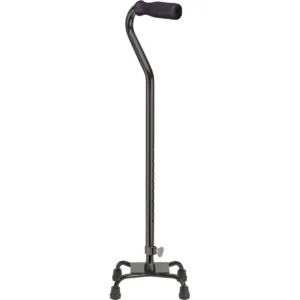
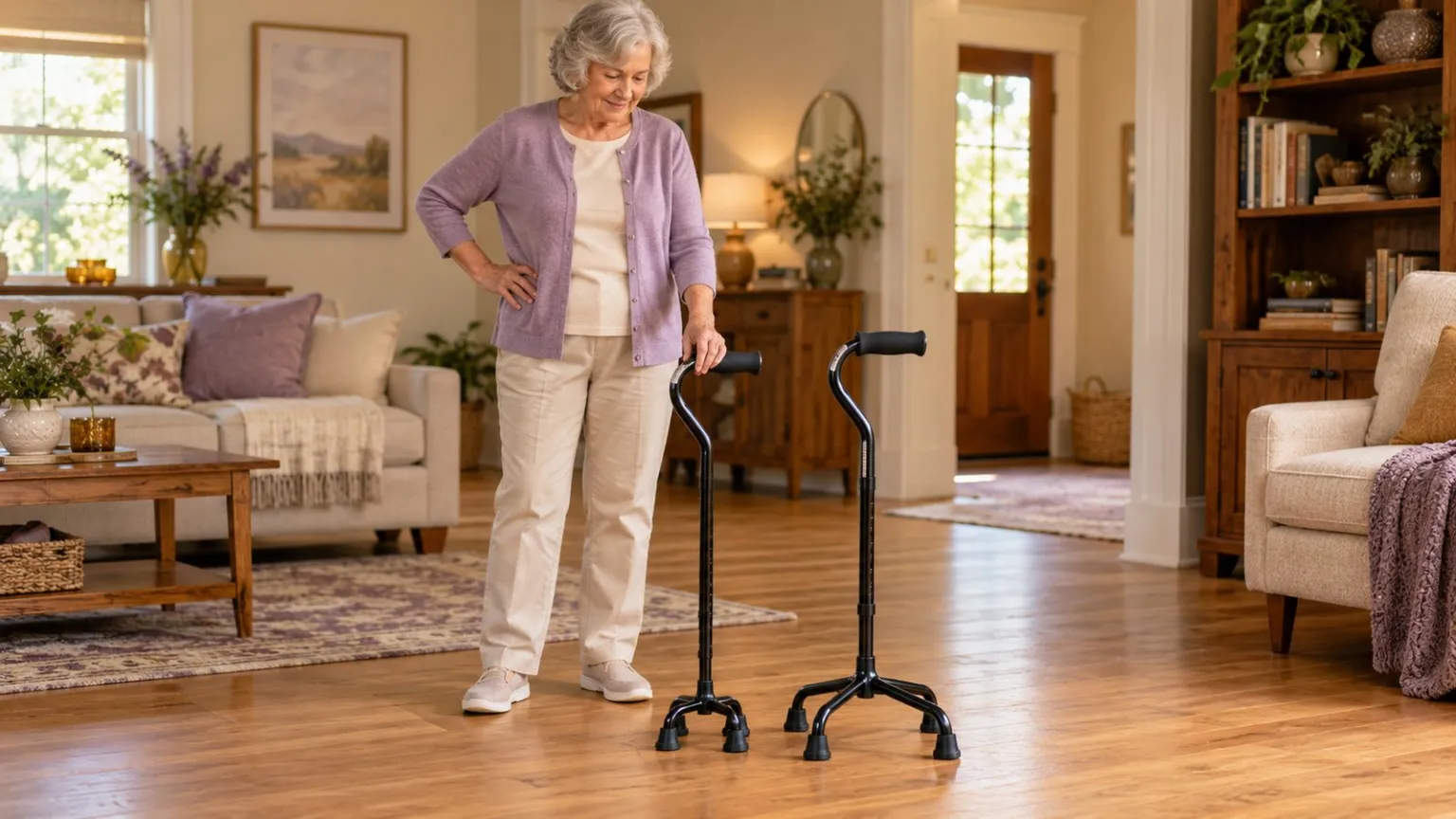
A quad cane has several feet at the bottom instead of one rubber tip. Those feet are attached to a base that may be relatively compact or broader. The size of that base affects how much floor space the cane uses and how it feels when placed beside the body.
The choice should not be based only on which cane looks steadier. The person’s walking pattern, balance, strength and home environment matter. A physical therapist or occupational therapist can help determine whether a quad cane is appropriate and which base style suits the person.
What is a small base quad cane?
A small base quad cane has four feet arranged in a compact footprint. Because the base is smaller, it usually fits more easily beside the user’s foot and around furniture.
The compact shape may also make it easier to place on narrow walking paths. It still takes more floor space than a single point cane, so the user needs to place the entire base flat on the floor.
What is a large base quad cane?
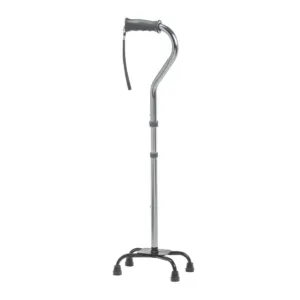
A large base quad cane spreads its feet across a broader area. This creates a wider footprint on the floor. Some users may prefer the feel of that larger base when their clinician has recommended this type of support.
The tradeoff is space. A broader base can be more noticeable beside the feet, around chair legs or in narrow areas. It may require more attention to placement while walking.
Does a larger base mean the cane is right for someone who needs more support?
Not automatically. Base size is only one part of the cane. The correct mobility aid depends on how much support the person actually needs.
If a person needs substantial support through both arms or has difficulty controlling balance with a cane, a walker or another device may be more appropriate. That is a personal mobility decision that should be discussed with a clinician.
Which base works better in a small home?
A small base may be easier to position in narrow hallways or rooms with furniture close together. Measure the places where the person usually walks, particularly beside the bed, around dining chairs and through the bathroom.
With either size, the entire base needs room to contact the floor. Avoid placing part of the base on a rug edge, threshold or other uneven surface.
Does the cane stand by itself?
Many quad canes can remain standing when placed on a flat surface. This can make the cane easier to keep within reach. However, being able to stand alone does not mean it cannot be knocked over.
Place it where the user can reach it without stretching or twisting. Do not rely on the cane as furniture support or use it in a way the instructions do not allow.
How should the height be set?
Wear normal walking shoes and stand naturally with the arm relaxed. A common starting point is to place the handle near the wrist crease. When holding the cane, the elbow should have a small, comfortable bend and the shoulder should stay relaxed.
Follow the clinician’s fitting instructions if they differ. After adjusting the cane, make sure every push button or locking collar is fully engaged.
Does the direction of the quad base matter?
Some quad cane bases are shaped so that one side sits closer to the user’s body. The base may need to be installed or oriented differently for right hand or left hand use.
Check the product instructions. If the base can be reversed, make sure it is secured correctly after changing sides. All feet should contact the floor as intended.
What should you inspect on the feet?
Look at each rubber tip. The tips should fit securely and show even contact with the floor. Replace worn or damaged tips with compatible parts.
Because a quad cane has several feet, inspect all of them rather than only the one that looks most worn. Uneven wear can change how the base sits.
What mistakes are common?
- Choosing the largest base without considering how much space it uses.
- Assuming base size alone determines the right level of support.
- Setting the cane too high or too low.
- Placing only part of the base on a step, rug edge or uneven surface.
- Using the base in the wrong orientation when the design is side specific.
- Ignoring worn tips on one or more feet.
What should you compare before buying?
Compare the base dimensions, height adjustment range, handle style, weight capacity and product weight. Think about the person’s normal walking route and how much room is available beside the feet.
If the person is moving from a different mobility aid to a quad cane, ask a clinician to confirm that the level of support is suitable.
If you are unsure whether a small or large base quad cane fits your needs, call an Avante Shop specialist for help.
Questions people ask
Is a large base quad cane better than a small one?
They serve different needs. A larger base has a broader footprint, while a smaller base can be easier to position in tight spaces.
Can a quad cane stand by itself?
Many can stand on a flat surface, but they can still be knocked over. Place the cane within easy reach.
Can I use the same quad cane in either hand?
Some designs allow the base orientation to be changed. Check the product instructions and make sure the base is secured correctly.
Do all four feet need to touch the floor?
Yes, the base should contact the floor as the product is designed to do. Avoid placing it partly on uneven surfaces.
This guide is general product information, not medical advice. If you are unsure what is right, speak to your doctor, nurse or therapist.