The short answer
- Keep cylinders secured so they cannot fall or roll.
- Keep oxygen equipment away from flames, smoking and heat sources.
- Use only regulators, carts and accessories approved for the oxygen system.
Medical oxygen cylinders contain oxygen under pressure. They need to be handled and stored according to the instructions from the oxygen supplier and equipment manufacturer.
This guide covers basic equipment handling. It does not explain how much oxygen to use. Oxygen flow and treatment instructions must come from the healthcare professional responsible for the person’s care.
How should oxygen cylinders be stored?
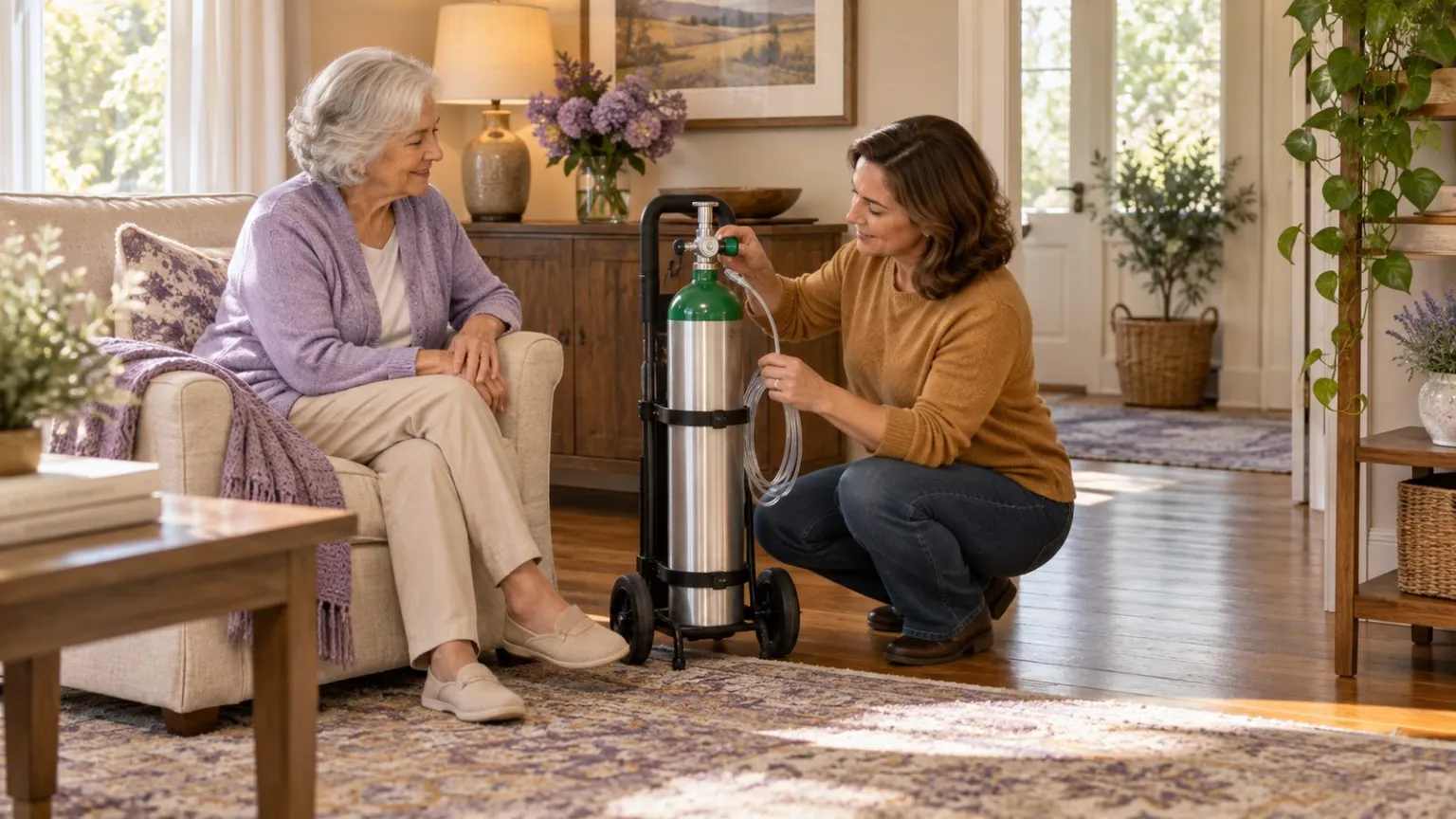
Cylinders should be secured in the position and storage system recommended by the supplier so they cannot fall, tip or roll.
Use a cylinder stand, rack, cart or another approved holder when required. Do not leave a cylinder loose where it can be knocked over.
Why does oxygen need to be kept away from flames?
Oxygen supports combustion. Follow strict no smoking instructions around oxygen equipment and keep cylinders away from open flames, sparks and heat sources.
Follow the safety distances and room requirements provided by the oxygen supplier. Post any safety notices they recommend.
Can a cylinder lie on the floor?
Storage position requirements depend on the cylinder and supplier instructions. Do not improvise a storage method.
If a cylinder is designed to be transported in a particular orientation or holder, use that setup. Keep it from rolling or being struck.
How should a cylinder be moved?
Use a cart or carrier designed for the cylinder size when one is required. Secure the cylinder before moving it.
Do not drag a cylinder by the valve, regulator or tubing. Protect the valve and connections from impact.
Can you use any regulator?
No. Regulators, conserving devices and connectors must be compatible with the oxygen system.
Use only equipment approved by the oxygen supplier or specified for the cylinder. Do not force a connector that does not fit.
What about oils or grease?
Follow the supplier’s warnings about substances that should not contact oxygen equipment. Oxygen systems require specific cleanliness and handling practices.
Do not apply household oils, lubricants or other products to valves or connections unless the equipment instructions specifically permit them.
How should tubing be arranged?
Oxygen tubing should be routed so it does not become trapped, sharply bent or create an unnecessary obstacle across a walking path.
If the person uses a walker or wheelchair, consider how the tubing and cylinder carrier will move with the equipment. Use accessories intended for that purpose.
What should you do before leaving home with a cylinder?
Use an approved carrier and secure the cylinder. Check the regulator and tubing according to the supplier’s instructions.
If traveling in a vehicle or using public transportation, follow the oxygen supplier’s guidance and the transportation provider’s requirements.
What should you inspect?
Check the cylinder, regulator, tubing and accessories for visible damage. Do not use equipment with damaged fittings or a valve that appears compromised.
If you hear an unexplained leak or the equipment does not operate as instructed, contact the oxygen supplier.
What mistakes are common?
- Leaving a cylinder unsecured.
- Placing oxygen equipment near smoking, flames or heat.
- Using an incompatible regulator or connector.
- Dragging a cylinder by its valve or tubing.
- Allowing tubing to create a walking obstacle.
- Changing prescribed oxygen flow without clinical instructions.
What should you check before buying accessories?
Confirm the cylinder size and oxygen system type. Choose carts, holders, tubing and other accessories that are compatible with that equipment.
When in doubt, verify compatibility with the oxygen supplier rather than relying on a visual match.
If you are unsure which oxygen accessory fits your equipment, call an Avante Shop specialist for help.
Questions people ask
Can I store an oxygen cylinder loose in a room?
Use the secured storage method required by the supplier so the cylinder cannot fall or roll.
Can people smoke in another part of the room?
Follow the oxygen supplier's no smoking and fire safety rules strictly.
Can I use any oxygen regulator that fits?
No. Use only regulators and connectors approved for the specific oxygen system.
Can I change the oxygen flow myself?
Use the flow prescribed by the healthcare professional responsible for the person's care. Do not change treatment settings on your own.
This guide is general product information, not medical advice. If you are unsure what is right, speak to your doctor, nurse or therapist.