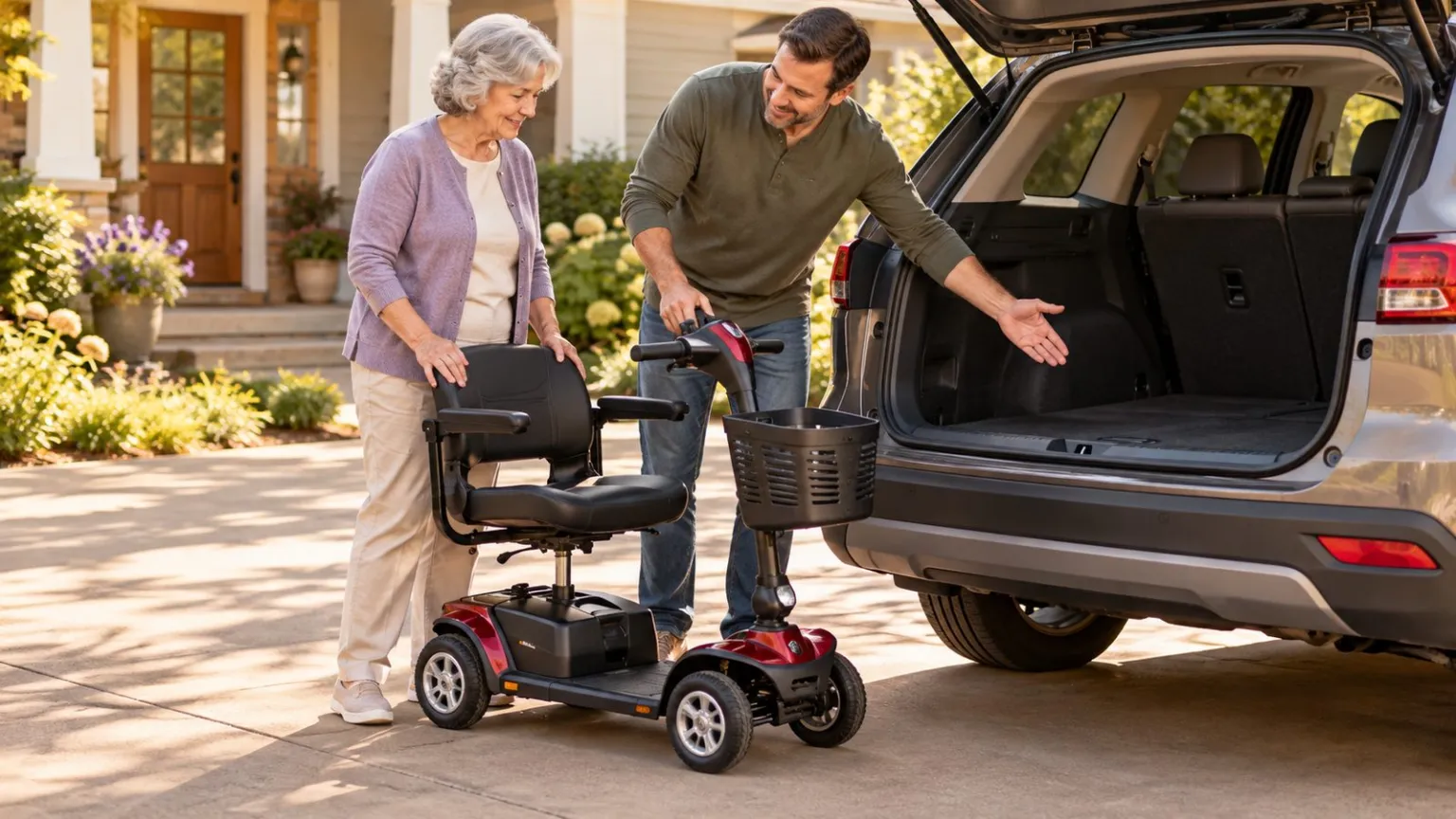
The short answer
- Check whether the scooter folds, separates into pieces or must be lifted as one unit.
- Compare seat fit, controls, weight capacity and intended surfaces.
- Confirm battery handling and transportation requirements before travel.
A portable mobility scooter is designed with transportation and storage in mind. Some fold. Others separate into several pieces. The right choice depends on the user, the vehicle, the places the scooter will be used and who will handle it during transport.
A scooter is a powered mobility device, so suitability should be discussed with a doctor, physical therapist or occupational therapist when there is any question about balance, vision, judgment, strength or ability to operate the controls.
Does the scooter fold or come apart?
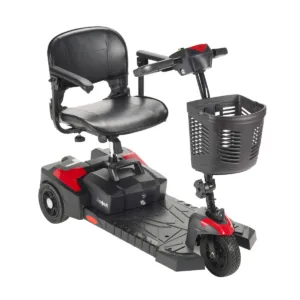
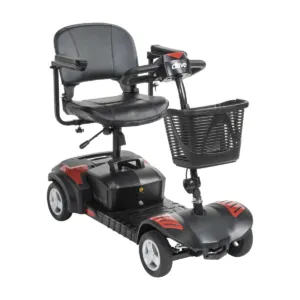
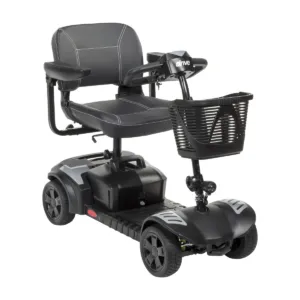
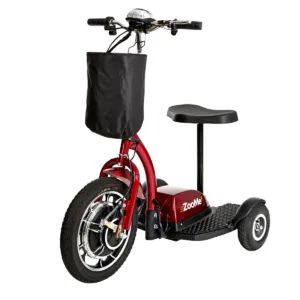
Portable scooters use different transport designs. A folding scooter may collapse while remaining mostly in one piece. A disassembling scooter may separate into a seat, battery section, base or other components.
Neither system is automatically easier. A single folding unit may still be heavy to lift. A scooter that separates may require more steps but create lighter individual pieces.
Check the weight of the heaviest part, not only the total scooter weight.
Will it fit in the vehicle?
Measure the available cargo area before buying. Compare its width, depth and height with the scooter’s folded dimensions or the dimensions of its separated components.
Also think about the opening of the trunk or cargo area. A scooter might technically fit inside but still be difficult to angle through a narrow opening.
Who will lift the scooter?
Identify the person who will normally load and unload it. Check whether that person can comfortably handle the heaviest component.
If a scooter requires lifting that feels difficult, portability on paper may not translate into practical portability. Consider the entire loading process, including bending, reaching and arranging the parts inside the vehicle.
How should the seat fit?
Check seat width, depth and height. The user should be able to sit comfortably with the controls within easy reach. Foot placement should work with the scooter’s floor area or foot platform.
Seat designs vary. Some rotate or remove for transport. Some have adjustable armrests. Compare these features with the person’s needs rather than assuming all portable scooters use the same seating position.
Can the user operate the controls?
The person needs to be able to steer, control speed and use any brake or direction controls as designed. Handlebar shape and control placement vary.
Check reach, hand control and visibility. If the person has difficulty operating the controls, ask a clinician whether a scooter is appropriate.
What surfaces will it be used on?
Portable does not mean suitable for every surface. Consider whether the normal route includes smooth indoor flooring, paved sidewalks, ramps, uneven pavement or other surfaces.
Check wheel size, ground clearance and the manufacturer’s intended use. Do not assume a compact scooter designed for smooth areas will perform the same way on rough ground.
What should you know about the battery?
Powered scooters use batteries that require charging and care according to the manufacturer’s instructions. Battery type, charging method and removal process vary by scooter.
Before taking a scooter on public transportation or an aircraft, check the carrier’s rules for mobility devices and batteries. Requirements can vary, so confirm directly with the transportation provider before the trip.
How important is turning space?
A compact scooter can still need more turning room than expected. Measure hallways, elevators and other indoor areas where the scooter will be used.
Overall length and turning behavior are important in small apartments, stores or narrow spaces. A scooter that fits through a doorway may not be able to turn immediately after passing through it.
What mistakes are common?
- Looking only at total scooter weight instead of the heaviest piece.
- Buying before measuring the vehicle cargo opening.
- Assuming portable means suitable for rough outdoor terrain.
- Ignoring seat fit and control reach.
- Failing to check transportation rules for the battery.
- Choosing a scooter that fits through a door but cannot turn in the available space.
What should you compare before buying?
Check weight capacity, seat dimensions, overall size, folded size, turning requirements, battery type, control layout and intended surfaces. Find the heaviest piece if the scooter separates.
Then compare those details with the user, the vehicle and the places the scooter will actually go.
If you are unsure which portable scooter features matter most, call an Avante Shop specialist for help.
Questions people ask
Is a folding scooter always easier to lift?
No. A folding scooter can remain relatively heavy because it stays in one main piece. Check the actual folded weight.
What does heaviest piece mean?
For a scooter that comes apart, it is the weight of the largest or heaviest individual component someone must lift.
Can I take a mobility scooter on an airplane?
Transportation providers have rules for mobility devices and batteries. Contact the carrier directly with the scooter and battery information.
Should I measure my trunk before buying?
Yes. Measure both the storage area and the opening the scooter must pass through.
This guide is general product information, not medical advice. If you are unsure what is right, speak to your doctor, nurse or therapist.