The short answer
- Wear your usual shoes and stand naturally with your arms relaxed.
- Start with the grips near the wrist crease and look for a small, comfortable elbow bend.
- Lock every adjustment point securely and ask a clinician for help if the fit still feels wrong.
A walker or rollator works best when the handles are set for the person using it. If the handles are too high, the shoulders may stay raised and the arms can feel awkward. If the handles are too low, the person may lean forward more than they need to. The goal is a height that lets the person stand as upright as they comfortably can while keeping a relaxed bend in the elbows.
How do you find a good starting handle height?
Put on the shoes that will usually be worn with the walker or rollator. Stand inside or just behind the frame in a natural, upright position. Let both arms hang down at the sides without reaching or shrugging. A common starting point is to line the top of the handgrip up near the crease of the wrist.
This is a fitting check, not a personal medical recommendation. Body shape, posture, arm length, balance and the way a person walks can all affect the best setting. If a doctor, nurse, physical therapist or occupational therapist has given fitting instructions, use those instructions.
What should your arms look like when you hold the grips?
Once the handles are adjusted, place both hands on the grips. The elbows should have a small, comfortable bend. The shoulders should feel relaxed rather than lifted toward the ears. The person should not need to bend far forward to reach the handles.
Look at the whole posture, not just the hands. If the person has to stretch the arms straight, hunch the shoulders or lean heavily onto the frame, the height may need another check. A mobility professional can help when posture or arm position makes the usual wrist check hard to use.
How do you adjust the legs or handles?
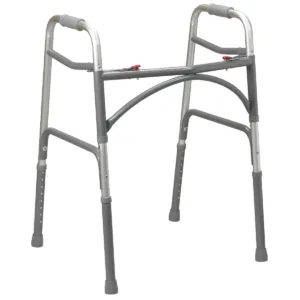
Adjustment methods vary by product. Many walkers use push buttons on the legs. Many rollators use knobs, bolts or another locking system on the handle posts. Check the product instructions before changing the height.
- Place the walker or rollator on a level surface.
- Adjust one side at a time using the product’s approved adjustment points.
- Match both sides to the same marked height setting unless a clinician has specifically instructed otherwise.
- Make sure every push button, knob, bolt or clamp is fully engaged and secure.
- Press down gently on the handles before use to check that nothing slips or moves.
Do not use a partly engaged push button or a loose adjustment knob. If a part does not lock securely, stop using the equipment and check the instructions or contact a specialist.
Should the walker or rollator be level?
In normal use, the frame should sit as the manufacturer intends, with all feet or wheels contacting the floor correctly. Do not create a height difference from side to side just to compensate for a slope, a shoe difference or an uneven floor unless a qualified professional has directed that setup for the individual.
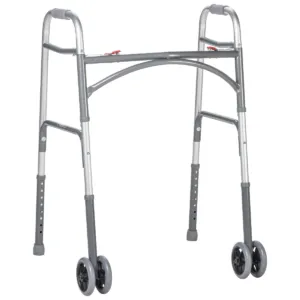
For a two wheeled walker, the front wheels and rear tips need to contact the floor properly. For a four wheeled rollator, all wheels should roll and the brakes should work as designed. After a height change, check that brake cables, locks and folding parts still move freely and are not pulled tight or caught.
What if you keep leaning over the walker?
Leaning forward can have several causes, so changing handle height is not always the answer. The equipment may be set too low, but the person’s posture, strength, vision, balance or walking pattern may also affect how they use it. Raising the handles too far can create a different problem by making the shoulders rise and reducing comfortable arm control.
If the person cannot stand comfortably in the frame, keeps pushing it too far ahead, or seems unsure where to place it, ask a physical therapist or occupational therapist to watch the person use it. A professional can look at both the fit and the walking pattern.
Do shoes matter when setting the height?
Yes. Shoes change standing height and can change how the person feels inside the frame. Set and check the walker while wearing the type of footwear normally used with it. If footwear changes a lot, recheck the fit before regular use.
Also check the equipment after folding, transport or storage. A height button can be moved by mistake, or a handle post may not be tightened fully after adjustment. A quick visual check can catch a mismatched side before the person starts walking.
What mistakes are common?
- Setting the handles while the person is wearing different footwear from what they normally use.
- Matching the handles to the waist instead of checking the person’s relaxed arm position.
- Leaving one side at a different adjustment mark.
- Using the walker before buttons, knobs or clamps are fully locked.
- Raising the handles to correct forward leaning without checking why the person is leaning.
- Ignoring brake cable position after changing a rollator handle height.
If you are unsure about fit or adjustment, call an Avante Shop specialist for help.
Questions people ask
Should walker handles line up with my wrists?
The wrist crease is a common starting point when the person stands naturally with arms relaxed. Final fit also depends on posture, arm length and how the person walks.
Can one walker handle be higher than the other?
Both sides are usually set to the same marked height. If a clinician has given different instructions for the individual, follow that guidance instead.
Why do my shoulders feel raised when I use my rollator?
The handles may be too high, or the overall fit may not suit your posture. Recheck the adjustment and ask a physical therapist or occupational therapist if the problem continues.
Do I need to recheck the height after folding the walker?
It is sensible to check that both sides still match and that every button, knob or clamp is fully secure. Folding, transport or storage can sometimes disturb an adjustment.
This guide is general product information, not medical advice. If you are unsure what is right, speak to your doctor, nurse or therapist.