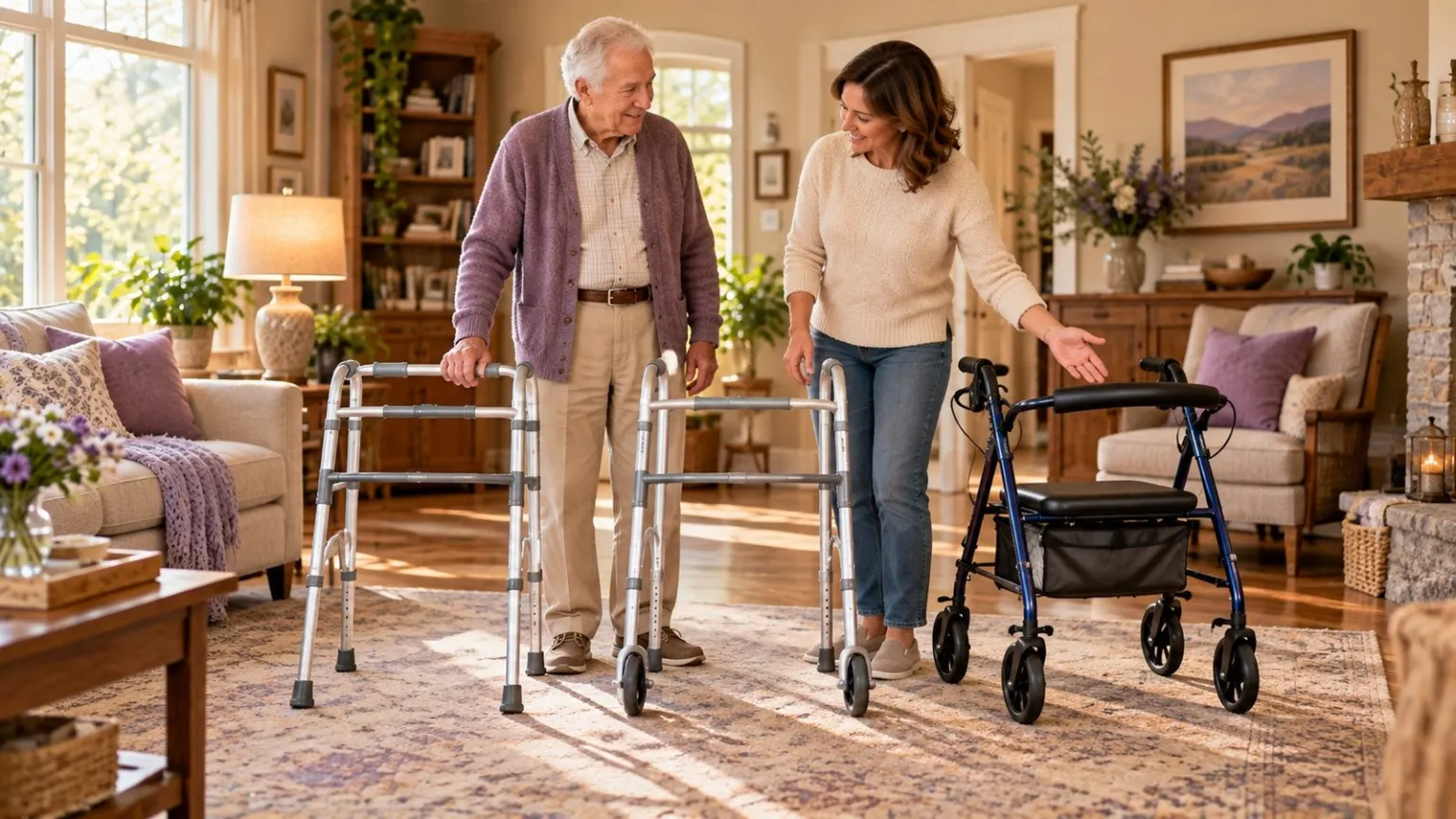
The short answer
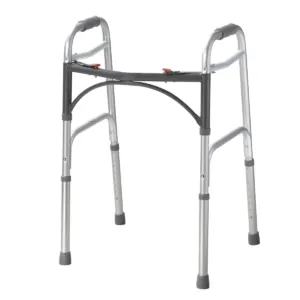
- A standard walker is lifted for each move and does not roll freely.
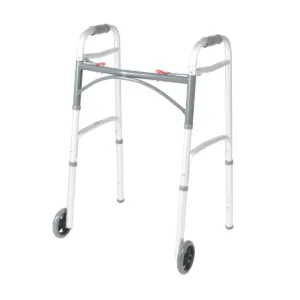
- A two wheel walker rolls at the front while the rear tips stay in contact with the floor.
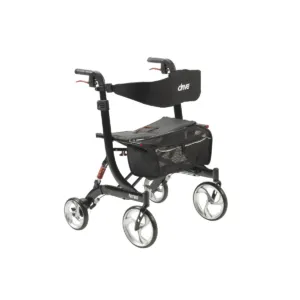
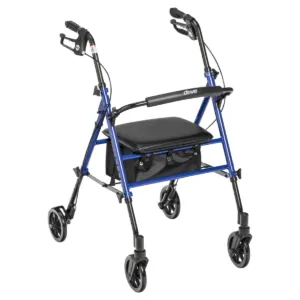
- A rollator rolls on all wheels and usually requires more steering and brake control.
A standard walker, a two wheeled walker and a rollator all provide a frame to hold while walking, but they move very differently. The best choice depends on how much support the person needs, whether they can lift the frame, how safely they can control wheels and brakes, and where they expect to use it.
Start with the person’s walking needs, not with which product looks easier. A doctor, physical therapist or occupational therapist can help decide which type is appropriate for an individual’s balance, strength and walking pattern.
What is a standard walker?
A standard walker has four legs that end in tips rather than wheels. To move forward, the user normally lifts the frame, places it a short distance ahead, then steps into it. Because the frame does not roll away when weight is placed on it, it can provide a very steady feeling for people who have been instructed to use this style.
The tradeoff is that the user must repeatedly lift or partly lift the walker. That can be tiring or difficult for someone with limited arm strength, hand pain or poor endurance. It can also make movement slower because each step includes moving the frame and then moving the feet.
How is a two wheeled walker different?
A two wheeled walker has wheels on the front legs and tips or glides on the rear legs. The front can roll forward while the rear stays in contact with the floor. This means the person may be able to move the walker without fully lifting it each time.
It can suit someone who needs more support than a freely rolling device provides but has trouble lifting a standard walker. The rear tips add drag, so the frame usually feels more controlled than a four wheeled rollator. The floor surface matters. Thick carpet, thresholds and uneven outdoor surfaces can change how easily the walker moves.
What makes a rollator different?
A rollator has wheels on all of its legs. Many four wheeled rollators also include hand brakes and a seat. Because the device rolls continuously, the user needs enough control to keep it close, steer it and operate the brakes as intended.
A rollator can be useful for a person who walks with a smoother, more continuous pattern and wants a device that moves with them. A seat can be helpful when the user wants a place to rest, but the seat should only be used according to the product instructions. The brakes should be locked as directed before sitting.
Which one asks the most of your arms?
A standard walker usually requires the most lifting. A two wheeled walker reduces that lifting because the front rolls. A rollator generally does not need to be lifted during normal walking, but it asks more from the hands for steering and braking.
Grip strength matters for any device. With a rollator, the person must be able to reach and operate the brake levers. With a walker, the person must be able to hold the grips securely while moving the frame. If hand strength or arm use is limited, ask a clinician to help match the equipment to the person.
What should you think about inside the home?
Measure the narrowest doors, hallways and spaces the device needs to pass through. Look at bathroom entrances, the space beside the bed and turns around furniture. A device that fits through the front door may still be awkward in a small bathroom or tight hallway.
Also look at floor transitions. Rugs, raised thresholds and clutter can affect any mobility device. Keep the normal walking route as clear as practical and make sure the selected equipment can move through the space without forcing the person to twist or lift it unexpectedly.
What should you think about outdoors?
Consider the surfaces the person actually uses. Smooth sidewalks are different from broken pavement, gravel or grass. Wheel size, frame design and the amount of effort needed to control the device can matter on uneven ground. Check the product information for its intended use and ask a specialist if the usual route includes difficult surfaces.
Do not assume that more wheels always means better outdoor performance. A rolling device can be easier to move, but it also requires control. The right balance between support and movement depends on the person.
What mistakes are common when choosing?
- Choosing a rollator only because it has a seat without checking whether the person can control the brakes.
- Choosing a standard walker without considering whether the person can lift it repeatedly.
- Ignoring door widths, bathroom space and tight turns at home.
- Assuming a two wheeled walker and a rollator move the same way.
- Buying for occasional outdoor use without checking how the device handles the actual surface.
- Skipping professional guidance when balance or walking ability is uncertain.
What should you check before buying?
Check the user’s height range, weight capacity, handle adjustment range and the overall width of the device. For a rollator, check the brake style, seat dimensions if a seat is included, folded size and product weight. For a walker, check the folding method and whether the rear legs use tips or compatible glides.
Then compare those details with the person, the home and the places where the equipment will be used. The right type is the one the person can use as instructed in their real environment.
If you are unsure which style fits the person’s needs, call an Avante Shop specialist for help.
Questions people ask
Is a rollator easier to move than a walker?
A rollator usually moves with less lifting because all of its wheels roll. It also requires the user to steer and control the brakes, so easier movement does not mean it suits every person.
Who may prefer a two wheel walker?
It may suit someone who has trouble lifting a standard walker but still needs the controlled feel of rear tips on the floor. A clinician can help decide whether that level of support fits the person's walking pattern.
Can I sit on any rollator?
No. Only use a seat if the specific rollator is designed with one, and follow its instructions. Lock the brakes as directed before sitting.
What home measurements matter most?
Check narrow doors, hallways, bathroom entrances and tight turns around furniture. Compare those spaces with the device's overall width and length.
This guide is general product information, not medical advice. If you are unsure what is right, speak to your doctor, nurse or therapist.