The short answer
- Three wheel rollators are often compact and easy to turn in tight spaces.
- Four wheel rollators often provide a broader base and may include a seat.
- Check handle fit, brakes, overall size, weight capacity and folded size before ordering.
Three wheel and four wheel rollators both give the user a wheeled frame to hold while walking. The main differences are the shape of the frame, how the rollator turns, the amount of space it takes up and the features it can carry. Neither style is right for everyone.
Before choosing, think about how the person walks, how much support they have been told to use, whether they need a seat, and where the rollator must fit. A physical therapist or occupational therapist can help if there is any doubt about whether a rolling device is suitable.
What is a three wheel rollator like to use?
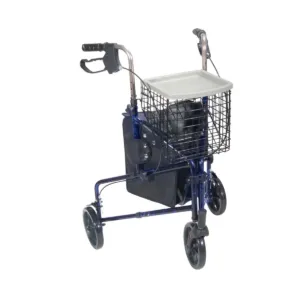
A three wheel rollator usually has one wheel at the front and two at the rear, forming a triangular frame. This shape can make it easier to turn in tight spaces and move through narrow areas. It can be appealing for small homes, crowded rooms or users who want a compact device.
Because there are only three contact points, the feel is different from a four wheel rollator. The user needs to keep the device close and control it through turns. A three wheel design may not offer the same broad base or seating options found on many four wheel designs.
What is a four wheel rollator like to use?
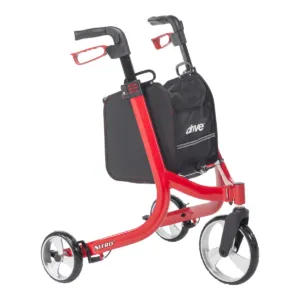
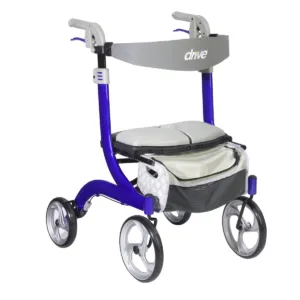
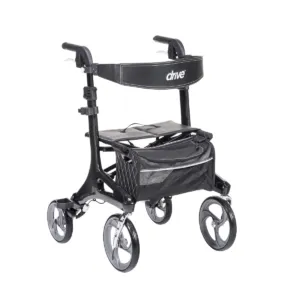
A four wheel rollator has two front wheels and two rear wheels. Many models include a seat, a back support and a storage pouch or basket. The wider rectangular base can feel more substantial, but it may also need more room for doorways and turns.
Four wheel rollators are often chosen by people who want a rolling aid plus a place to sit for a rest. If a seat is important, check that the specific product includes one and review the instructions for safe seating. Brakes should be used exactly as directed before sitting or standing from the seat.
Which style is easier in a small home?
A three wheel rollator can be easier to turn in narrow hallways or around furniture because of its compact shape. That does not mean it will fit every home. Measure the narrowest doorway and the tightest turn the user has to make.
For a four wheel rollator, pay attention to overall width and length as well as the turning space. A device may pass through a doorway but still be hard to position beside a bed, toilet or dining chair. When possible, map the normal walking path through the home before buying.
Do you need a seat?
If sitting during a walk is an important part of the plan, a four wheel rollator is usually the first style to compare because many include a built in seat. Do not assume every four wheel model has the same seat size, seat height or weight capacity. Check the product specifications.
Three wheel rollators are generally chosen for walking support and compact movement rather than for seated rest. If the person needs to sit often, discuss that need with a mobility professional and compare equipment designed for that use.
How important are the brakes?
Very important. A rollator rolls freely compared with a standard walker, so the user needs to understand how to slow, stop and lock it. Brake designs vary, but many use hand levers connected to the rear wheels.
Before buying, make sure the user can reach the levers comfortably and operate them with the available hand strength. After any handle height adjustment, check that the brake cables are not pulled tight, twisted or caught. Follow the product instructions for brake adjustment and maintenance.
What should you compare for outdoor use?
Look at the surfaces the person uses most. Sidewalk seams, curb cuts, gravel and rough pavement can all change how a small wheeled device feels. Check wheel size, tire material, frame design and the manufacturer’s intended use. A rollator that feels easy on a smooth indoor floor may feel very different outside.
Also consider transport. If the rollator must go into a car, check how it folds, its folded dimensions and its total product weight. A compact frame is only helpful if the person or caregiver can lift and store it safely.
What about bags, baskets and personal items?
Many rollators include storage or accept accessories. Storage can be useful for small personal items, but it should not be used in a way that interferes with steering, brakes or folding. Follow the product instructions for where items may be carried and how much the storage area is designed to hold.
Avoid hanging heavy bags from the handles. Extra weight high on the frame can change how the rollator handles. Use storage designed for the device instead.
What mistakes are common?
- Choosing three wheels only because the frame looks smaller without measuring the home.
- Choosing four wheels only because a seat is included without checking whether the user can control the brakes.
- Assuming every rollator has the same seat height, width or weight capacity.
- Ignoring folded size when the device will travel in a car.
- Hanging heavy bags from the handles instead of using approved storage.
- Using a rolling device when a clinician has recommended a different level of support.
What should you check before ordering?
Compare the handle height range with the user’s fit, and compare the weight capacity with the user’s body weight. Check overall width, wheel size, product weight and folded dimensions. If a seat is included, check its size and height. If storage matters, check what comes with the rollator and how it is intended to be used.
If you are unsure whether three wheels or four wheels suit the person better, call an Avante Shop specialist for help.
Questions people ask
Are three wheel rollators good for narrow hallways?
Their compact triangular shape can make tight turns easier. Measure the actual hallway, doorway and turning space before deciding.
Do all four wheel rollators have seats?
No. Many do, but features vary by product. Check the specifications for seat size, seat height and weight capacity when a seat matters.
Can I hang a shopping bag from the handles?
Heavy bags on the handles can change how the rollator handles. Use storage designed for the device and follow the product instructions.
What should I check if the rollator travels in a car?
Look at folded dimensions, total product weight and how the frame folds. Make sure the person loading it can handle the folded rollator comfortably.
This guide is general product information, not medical advice. If you are unsure what is right, speak to your doctor, nurse or therapist.