The short answer
- Start with the movements that are difficult: standing, stepping over the tub, sitting or reaching.
- Bath seats, transfer benches, toilet supports and grab bars solve different problems.
- An occupational therapist can help match equipment to the person and bathroom.
A bathroom can require repeated sitting, standing, turning and stepping over raised edges. When those movements become difficult, the best equipment depends on exactly where the difficulty occurs.
Rather than buying several items at once, walk through the bathroom routine and identify the problem points. An occupational therapist can assess the person’s movements and the room together.
Is standing during a shower difficult?
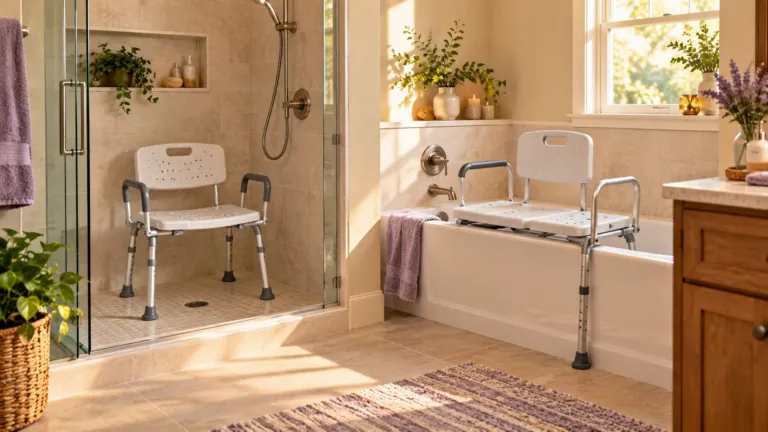
A shower chair, bath bench or bath stool can provide a place to sit while washing. The right design depends on the amount of room available and the support the person needs while seated.
Measure the shower or tub floor before choosing a seat. All legs need to contact the intended surface securely. Check seat height, width, weight capacity and whether a back or arm support is needed.
Is stepping over the bathtub wall difficult?
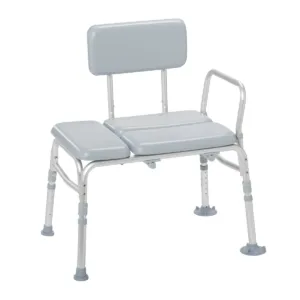
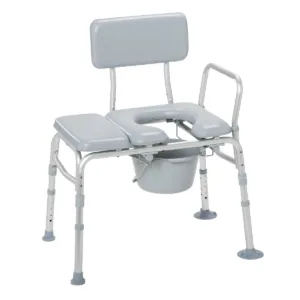
A transfer bench is designed to span the bathtub edge. The person can sit on the portion outside the tub and move across the bench rather than stepping completely over the wall.
This equipment takes space both inside and outside the bathtub. Measure carefully around the toilet, sink and bathroom door.
A therapist can show whether a transfer bench fits the person’s movement needs.
Is getting up from the toilet difficult?
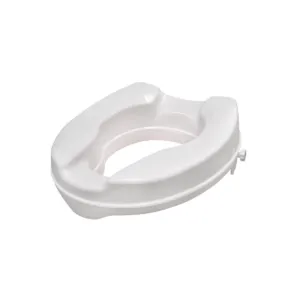
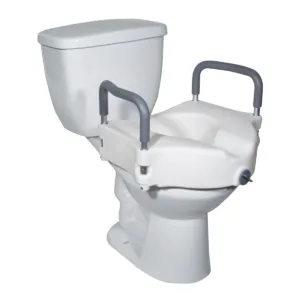
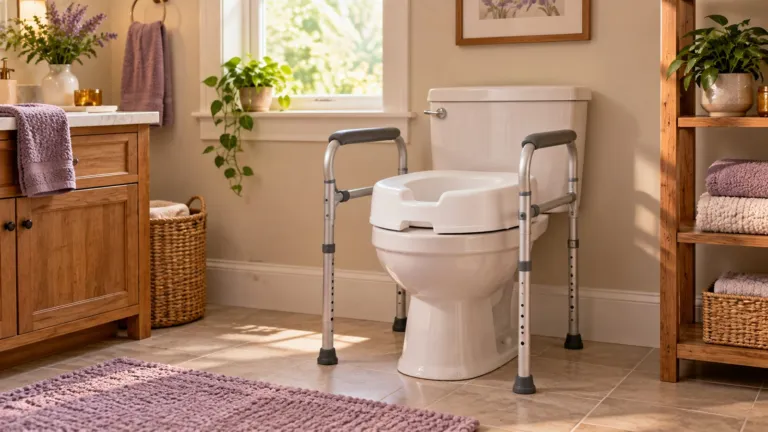
A raised toilet seat increases the sitting height. A toilet safety frame provides hand supports. Some products combine both.
Check toilet shape, seat attachment, arm width and available floor space. Seat height should suit the person rather than simply being as high as possible.
Would a grab bar help?
A properly selected and installed grab bar provides a designated place to hold during specific bathroom movements. Placement matters. A bar should be where the person’s hand naturally needs support rather than where installation happens to be easiest.
Wall mounted grab bars require appropriate structural installation. Suction style handles have different limitations and should only be used according to their instructions.
Can a handheld shower spray make seated bathing easier?
A handheld shower spray allows the water source to be directed while the person remains seated. This can reduce the need to stand or turn repeatedly under a fixed shower head.
Check hose length, mounting location and whether the controls can be reached from the seat. Keep the hose arranged so it does not become tangled around the person’s feet or equipment.
What about the bathroom floor?
Keep the normal path clear of loose objects and unnecessary clutter. Shower and bathtub mats should be designed for the intended wet area and used according to their instructions.
Loose household rugs can move or bunch under mobility equipment. Look at the entire path from the door to the toilet and bathing area.
How should equipment be arranged?
Bathroom equipment should work together. A bath seat that blocks a grab bar or a toilet frame that prevents a walker from approaching can create another problem.
Consider the sequence of movements. Where does the person place a walker? Where is the towel? Can the person reach the shower controls while seated? Can the door still close without hitting the equipment?
Should everything be installed at once?
Not necessarily. Start with the specific movements causing difficulty and choose equipment that addresses those needs.
Adding equipment without a plan can make a small bathroom crowded. An occupational therapist can be particularly useful when several products may need to work together.
What mistakes are common?
- Buying a bath chair without measuring the tub or shower.
- Choosing the tallest raised toilet seat without checking fit.
- Using towel racks as grab bars.
- Adding equipment that blocks the normal walking path.
- Placing controls or toiletries beyond easy reach.
- Assuming one bathroom setup works for every person.
What should you measure?
Measure the shower or tub floor, tub wall height if relevant, space around the toilet, doorway width and clear floor area. Note where permanent fixtures are located.
Then compare those measurements with the full outside dimensions of the equipment, not only the seat size.
If you are unsure where to start with bathroom equipment, call an Avante Shop specialist for help.
Questions people ask
What equipment can reduce standing in the shower?
A shower chair, bath bench or stool can provide a seated bathing surface when appropriate for the person and bathroom.
What helps with stepping over a bathtub?
A transfer bench is designed to let a person sit before moving across the tub edge. A therapist can confirm whether it suits the person.
Can I use a raised toilet seat and safety frame together?
Some products are compatible and some combine both features. Check the installation instructions before combining separate items.
Who can assess my bathroom setup?
An occupational therapist can evaluate the person's movements and the bathroom layout together.
This guide is general product information, not medical advice. If you are unsure what is right, speak to your doctor, nurse or therapist.