The short answer
- Choose the type according to the person's assessed need, not just the bed size.
- Check mattress thickness, bed frame compatibility and possible gaps.
- Install exactly as instructed and recheck after changing the mattress.
Bed rails and bed assist handles are often grouped together, but they can serve different purposes. Some provide a handhold for getting in or out of bed. Others extend farther along the mattress edge.
Bed rail selection deserves careful attention because the mattress, bed frame and rail form one complete setup. Gaps between components can be important. A doctor, nurse, physical therapist or occupational therapist should help determine whether a rail or assist handle is appropriate for the person.
What is a bed assist handle?
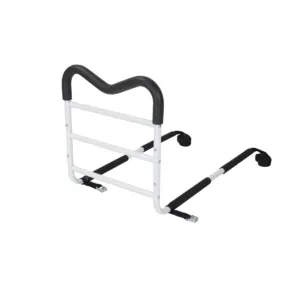
A bed assist handle is usually a shorter support positioned near part of the mattress edge. It may be designed to give the person a place to hold during bed movement or transfers.
The way it attaches varies. Some fit under the mattress and connect to the bed frame or use another securing method.
What is a longer bed rail?
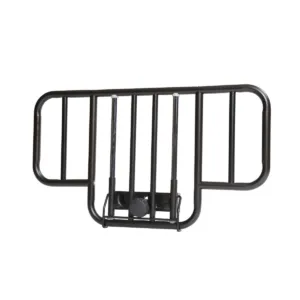
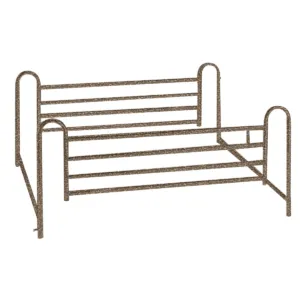
A longer rail extends across more of the bedside. Designs may be fixed, adjustable, fold down or telescope depending on the product.
Longer coverage does not automatically mean the rail is more appropriate. The person’s needs and the safety of the complete bed setup are what matter.
Why does mattress thickness matter?
A rail may sit at a different height relative to a thin mattress than it does with a thick mattress. Changing the mattress can also change gaps between the rail and mattress.
Check the rail’s mattress compatibility range if one is specified. If the mattress is replaced, reassess the installation before continued use.
Why are gaps important?
Spaces between the rail, mattress, headboard and bed frame can create hazards if the rail is not compatible or correctly installed.
Follow all spacing and installation requirements in the product instructions. Do not create makeshift fillers or modify the rail to close a gap.
If you are unsure about compatibility, ask a clinician or equipment specialist before use.
Can a bed rail fit any bed?
No. Adjustable beds, platform beds, homecare beds and traditional frames can have different structures.
Check whether the rail is approved for the specific bed style and mattress type. Some products require a particular frame or available space underneath the mattress.
Should the rail be used to stop someone from getting out of bed?
Do not use a rail as a restraint unless that use is specifically part of a professionally directed care plan and the equipment is designed for it.
For a person who is confused, restless or likely to climb over a rail, adding a rail may create different risks. Discuss the situation with the healthcare team.
What should you check after installation?
Make sure straps, brackets, bolts or other attachment parts are secured exactly as instructed. Press and pull gently on the rail to check for unexpected movement.
Confirm that the mattress sits in its normal position and that all required gaps remain within the manufacturer’s instructions.
What if the rail folds down?
Learn how the release mechanism works and make sure it locks fully when raised. Keep bedding away from moving hinges and latches.
A caregiver should understand the locking system before relying on the rail during a transfer.
What mistakes are common?
- Buying a rail without checking bed compatibility.
- Ignoring mattress thickness.
- Using a rail with unapproved gaps.
- Failing to secure straps or brackets.
- Changing mattresses without rechecking the rail.
- Using a rail to solve a behavior or supervision problem without clinical guidance.
What should you compare before buying?
Check the intended purpose, rail length, attachment method, bed compatibility, mattress requirements, weight capacity and whether the rail folds or adjusts.
Make the person’s care plan the starting point. Bed rails are not a one size fits all accessory.
If you are unsure whether a bed rail fits your bed and mattress, call an Avante Shop specialist for help.
Questions people ask
Will a bed rail fit any mattress?
No. Mattress thickness and bed design can affect rail position and gaps. Check the compatibility instructions.
Is a bed assist handle the same as a full bed rail?
No. Assist handles are generally shorter and may be intended mainly as a handhold.
Do I need to recheck the rail after replacing the mattress?
Yes. A different mattress can change rail height and gaps.
Can a bed rail be used to keep someone in bed?
Do not use a rail as a restraint without professional direction and equipment specifically intended for that use.
This guide is general product information, not medical advice. If you are unsure what is right, speak to your doctor, nurse or therapist.