The short answer
- The lift and sling must be compatible with each other.
- Sling size and style should follow the person's transfer assessment.
- Caregivers need training on the exact lift and sling before use.
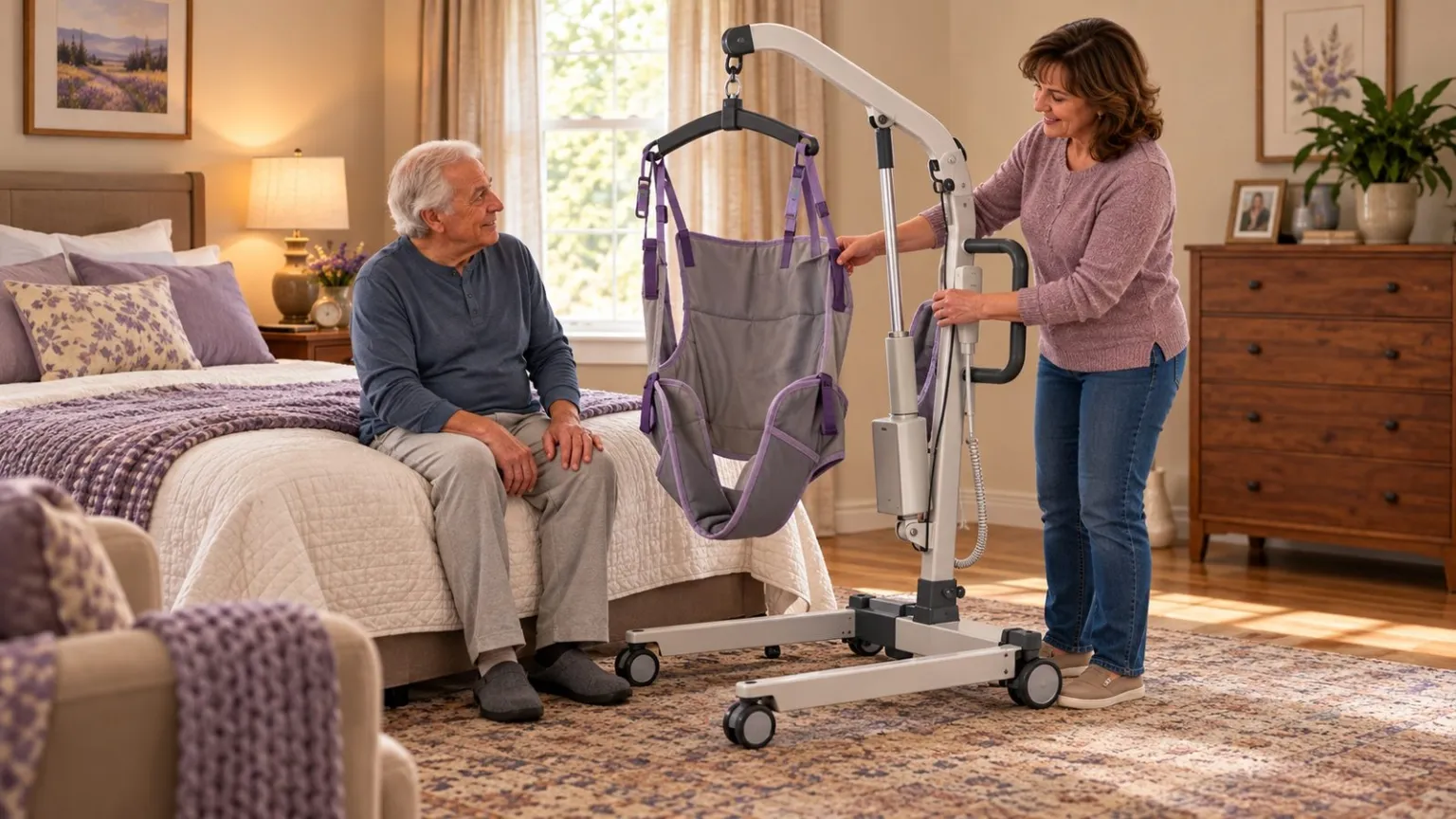
A patient lift is equipment designed to assist with transferring a person between locations such as a bed, chair or commode. The person is supported in a sling that attaches to the lift.
This is specialized equipment. A physical therapist, occupational therapist, nurse or other qualified professional should assess the person’s transfer needs and train caregivers on the exact lift and sling being used.
What are the main parts of a patient lift?
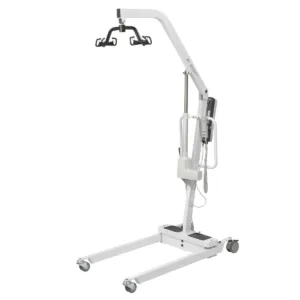
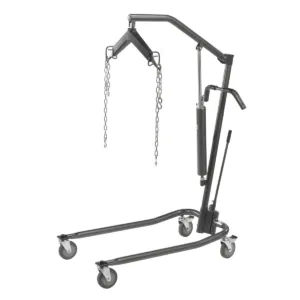
A typical lift includes a base, upright frame, lifting arm and attachment point for a sling. Some lifts are manually operated and others use powered lifting controls.
The base may open wider for positioning around furniture. Wheels allow the lift to be moved according to the instructions.
What does the sling do?
The sling supports the person’s body during the transfer. Sling designs differ in how much of the body they support and where straps or loops attach.
The sling needs to be the correct style and size for both the person and the lift. Do not choose a sling simply because it physically attaches to the lift.
Are all slings compatible with all lifts?
No. Attachment systems vary. Some use loops, clips or other connection methods.
Check the lift and sling compatibility information. If the manufacturer does not approve the combination, do not assume it is safe because the straps appear to fit.
How is sling size chosen?
Sling sizing may depend on body measurements, weight and the person’s positioning needs. Follow the manufacturer’s sizing guide and the recommendation of the clinician who assessed the transfer.
A sling that is too large or too small can change how the person is supported.
Does weight capacity matter?
Yes. Check the stated weight capacity of the lift and the sling. The entire setup must meet the user’s needs.
Do not assume that a sling and lift have the same capacity. Check each component separately.
How much space does a lift need?
Measure the room where transfers happen. The base needs room to approach the bed, chair or commode. The caregiver also needs space to stand and operate the lift.
Check doorway width and turning space if the lift will be moved between rooms.
What about the bed or chair?
The lift needs to work with the furniture used for transfers. Base height, leg spread and clearance under the bed or chair can matter.
Measure the available clearance and compare it with the lift specifications. Do not assume the base will slide under every bed.
What should caregivers learn before use?
Caregivers should be trained to position the sling, attach every loop or clip correctly, operate the controls and move the lift according to the instructions.
They should also know how to recognize a damaged sling or a problem with the lift.
Do not learn by trial and error while a person is suspended in the equipment.
What should you inspect?
Check sling fabric, seams, straps, loops and attachment points for wear or damage. Inspect the lift according to its maintenance instructions.
For powered lifts, make sure the battery is charged and controls are functioning. Learn any emergency lowering procedure described in the manual.
What mistakes are common?
- Using a sling that has not been confirmed as compatible.
- Choosing sling size by guesswork.
- Exceeding the capacity of either the sling or lift.
- Using damaged sling fabric or straps.
- Trying to operate the equipment without hands on training.
- Buying a lift before measuring furniture clearance and room space.
What should you compare before buying?
Confirm lift type, sling attachment system, weight capacity, base dimensions, furniture clearance, turning space and power requirements. For the sling, check style, size, attachment method and care instructions.
Make the clinician’s transfer assessment the starting point. Equipment should match the person’s actual transfer plan rather than requiring the person to adapt to an unsuitable lift.
If you are unsure which lift or sling matches the prescribed setup, call an Avante Shop specialist for help.
Questions people ask
Can any sling be used on any patient lift?
No. Attachment systems and approved combinations vary. Confirm compatibility for the exact lift and sling.
How do I choose sling size?
Use the manufacturer's sizing instructions together with the clinician's transfer assessment.
Can one caregiver operate a patient lift?
Staffing needs depend on the equipment instructions and the person's transfer plan. Follow the training provided for that individual setup.
What should I inspect on a sling?
Check fabric, seams, straps, loops and attachment areas for wear or damage before use.
This guide is general product information, not medical advice. If you are unsure what is right, speak to your doctor, nurse or therapist.