The short answer
- Begin with the care plan and the tasks that are difficult.
- Assess the bedroom, bathroom and main walking route.
- Buy equipment for specific needs rather than filling the home with unused items.
When a parent needs more help at home, it can be difficult to know which equipment is useful and which items will only take up space. The simplest approach is to look at daily activities one by one.
Start with the person’s doctor, nurse, physical therapist or occupational therapist. Their care plan can identify which tasks need equipment, supervision or professional training.
Start with walking through one normal day
Think about getting out of bed, walking to the bathroom, bathing, dressing, eating, sitting in a chair and moving around the home.
Write down where help is needed. This produces a more useful equipment list than shopping by category.
What equipment may help with walking?
Depending on professional recommendations, the person may use a cane, walker, rollator or wheelchair.
Do not choose a device simply because it seems easier. Each provides a different amount and type of support. A physical therapist can recommend the appropriate mobility aid and fit it to the person.
What should you check in the bathroom?
Bathrooms often combine narrow spaces, wet surfaces and repeated transfers. Equipment may include a shower chair, transfer bench, raised toilet seat, toilet safety frame, grab bar or handheld shower spray.
Measure before buying. Make sure several pieces of equipment can fit together without blocking the walking path.
What about the bedroom?
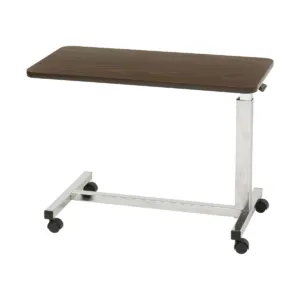
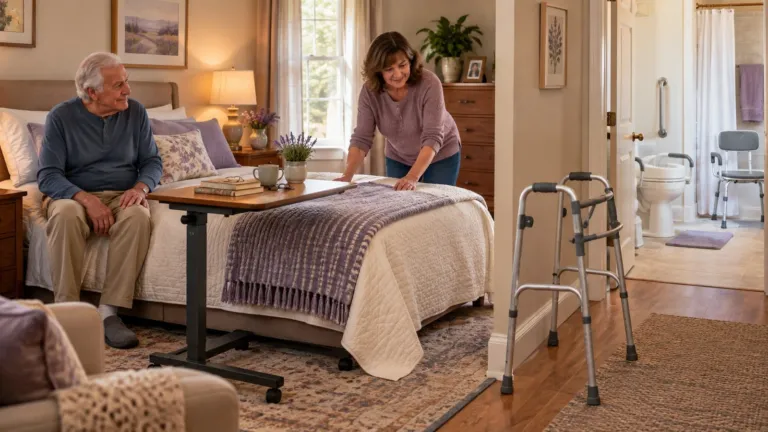
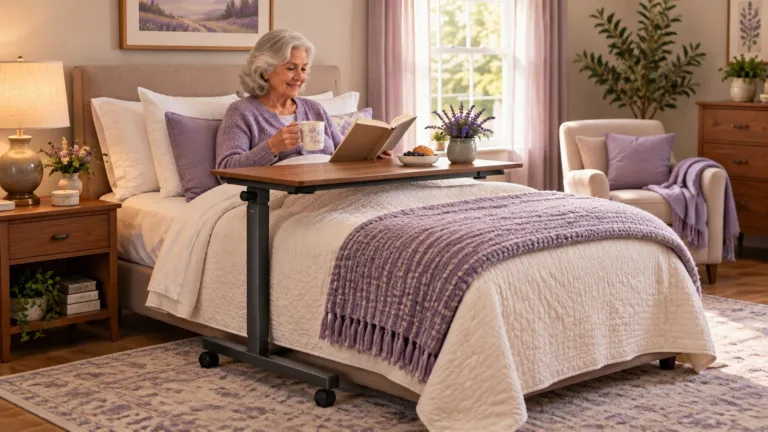
The bedroom may need space for a walker, wheelchair or caregiver beside the bed. Some people may use an overbed table, bedside commode, bed assist handle or homecare bed.
Bed rails and support equipment should be chosen carefully because compatibility with the mattress and bed frame matters.
When is a bedside commode useful?
A commode may be part of the care plan when the bathroom is difficult to reach. It can be positioned closer to the bed or chair.
Check seat height, width, weight capacity and available transfer space. A drop arm design may be recommended for certain transfer methods.
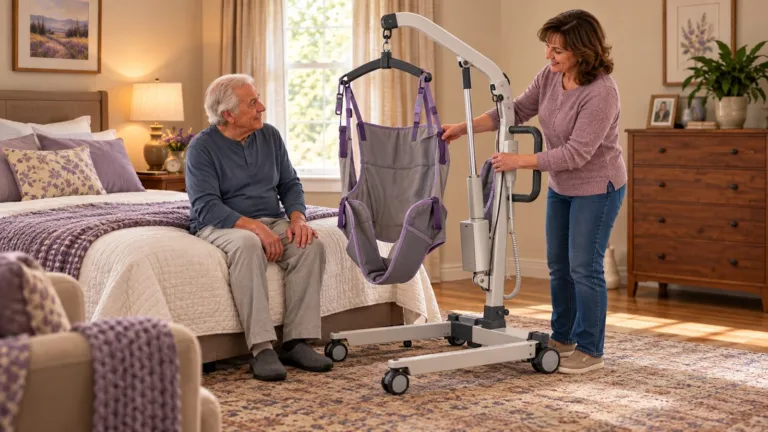
What if transfers require a lot of caregiver effort?
Do not improvise difficult lifting techniques. Ask a physical therapist or occupational therapist to assess the transfer.
If a patient lift and sling are recommended, caregivers need training on the exact equipment. Lift and sling compatibility, sizing and weight capacity are essential.
How can daily living aids help?
Small tools may make dressing, reaching or eating easier. A reacher, dressing aid or easy grip utensil may solve one specific daily problem.
Ask an occupational therapist which tool matches the task instead of buying a large assortment.
What should caregivers keep nearby?
Store frequently used items within practical reach. Keep equipment instructions where family members can find them.
For powered equipment, know how to charge it, what alarms mean and who to contact if it stops working.
How do you avoid turning the home into a storage room?
Only add equipment that addresses a current need or an identified care plan requirement. Large items can make rooms harder to move through if they are not needed.
Review the setup as the person’s abilities or care plan change. Equipment that was useful at one stage may need adjustment or replacement.
What mistakes are common?
- Buying equipment without asking what task it solves.
- Using an old walker or wheelchair without checking fit.
- Adding bathroom equipment without measuring the room.
- Trying to perform difficult transfers without professional instruction.
- Buying a patient lift without checking sling compatibility.
- Keeping unnecessary furniture in paths used by mobility equipment.
Create a practical checklist
For each room, write down the activity, the difficulty and the equipment recommended by the care team. Add measurements before shopping.
Keep the list simple. The goal is not to own more equipment. It is to make the person’s care routine workable for the person and caregiver.
If you are unsure where to start with home care equipment, call an Avante Shop specialist for help.
Questions people ask
What equipment should I buy first?
Start with the tasks causing the most difficulty and the recommendations from the person's care team.
Should I buy a wheelchair just in case?
Mobility equipment should fit the person's current needs and measurements. Ask a therapist before choosing.
Who can assess the bathroom?
An occupational therapist can look at transfers, bathing, toileting and the room layout together.
When is caregiver training important?
Training is particularly important for specialized transfer equipment such as patient lifts and slings.
This guide is general product information, not medical advice. If you are unsure what is right, speak to your doctor, nurse or therapist.