The short answer
- Match cushion width and depth to the wheelchair seat.
- Consider cushion height because it changes the user's seated position.
- Ask a clinician for help when skin protection or positioning is a concern.
A wheelchair cushion is more than a soft pad. It becomes part of the seating system and can change how high the person sits, how the legs meet the footrests and how the body is positioned in the chair.
The correct cushion depends on the wheelchair dimensions and the user’s individual needs. If skin protection, posture or positioning is a concern, a physical therapist, occupational therapist or other qualified clinician should help select the cushion.
What measurements do you need?
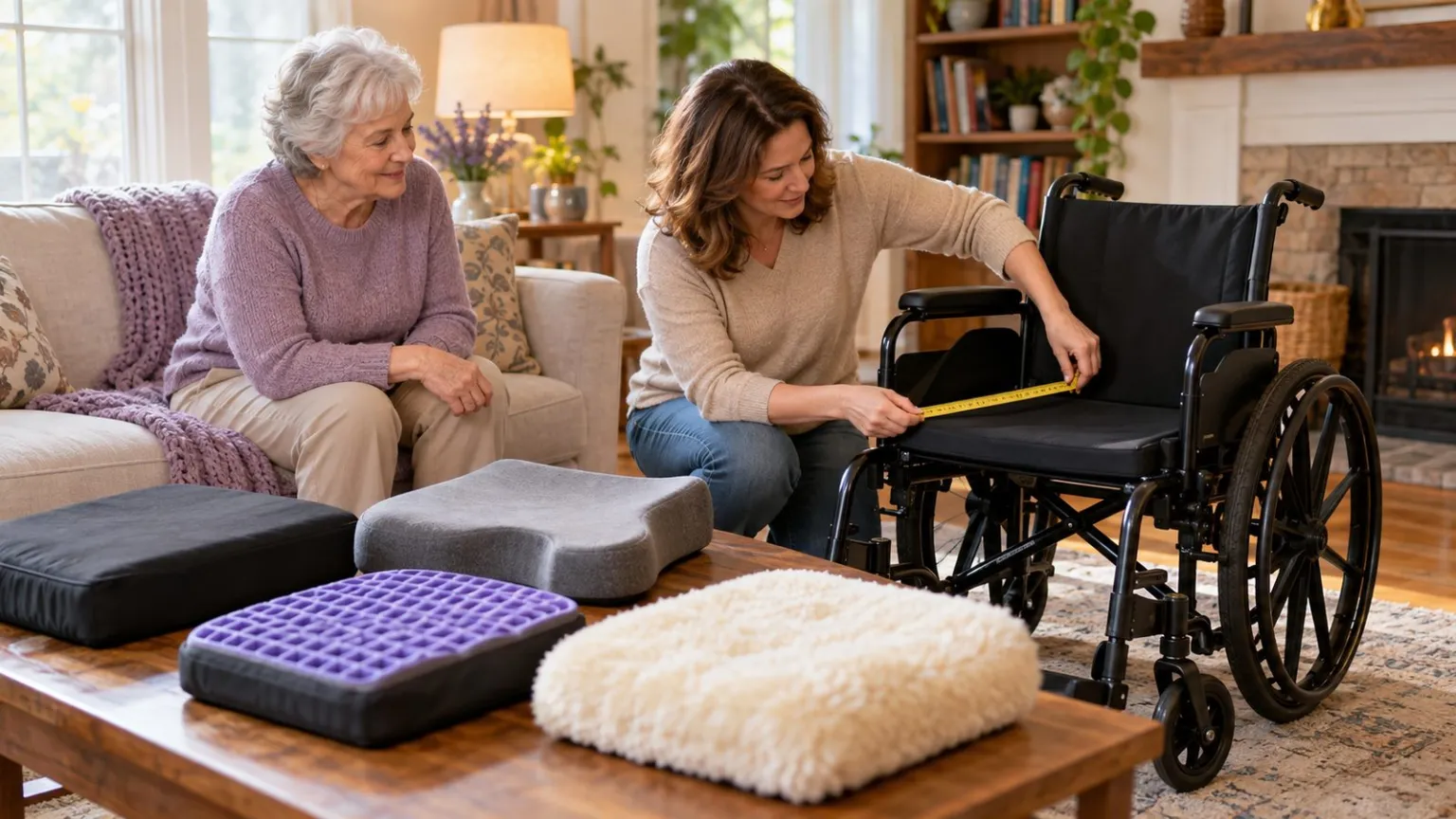
Start with the wheelchair seat width and depth. The cushion should fit the seat area according to the manufacturer’s directions without hanging far beyond the frame or leaving large unsupported gaps.
Do not estimate based only on the user’s clothing size. Measure the actual chair and confirm the cushion’s listed dimensions.
Why does cushion height matter?
A cushion raises the person above the wheelchair seat. That can change armrest height, footrest position and how easily the user reaches the hand rims.
A thicker cushion can also change the relationship between the person’s knees and the underside of tables or desks.
When replacing one cushion with another, compare height as well as width and depth.
What cushion materials are available?
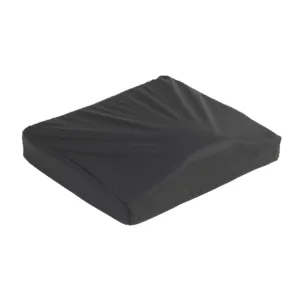
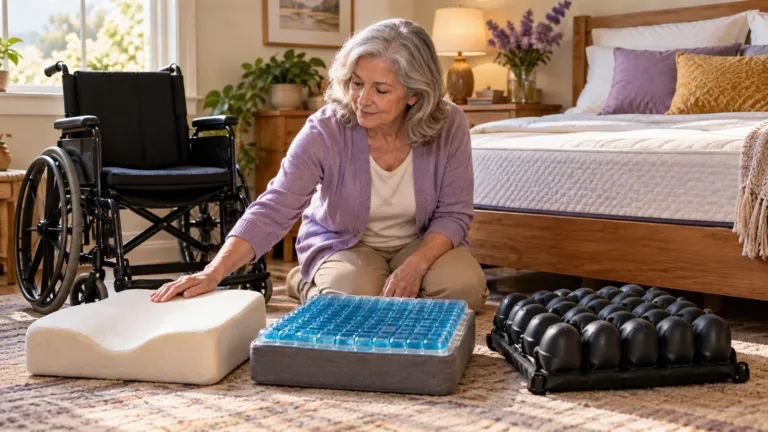
Wheelchair cushions may use foam, gel, air or combinations of materials. Each type feels different and may require different maintenance.
Material alone does not tell you which cushion is best for a particular person. Shape, cover, thickness, adjustment and the user’s clinical needs also matter.
What should you know about foam cushions?
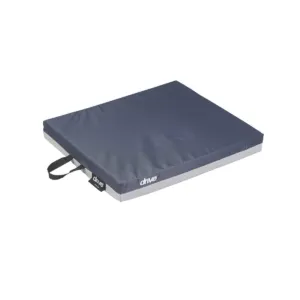
Foam cushions are generally simple to use because they do not need air adjustment. Foam density, contour and thickness vary.
Check whether the cushion has a shaped surface, a flat surface or other positioning features. Follow cleaning instructions for both the foam and cover.
What should you know about gel cushions?
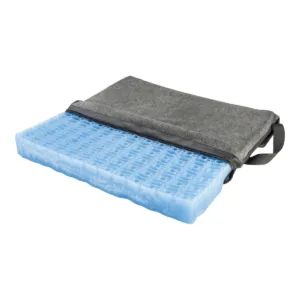
Gel may be used alone or with foam. The internal material can add weight compared with some other cushion types.
Check whether the cushion needs to be handled or positioned in a particular way. Inspect the cover and internal structure according to the manufacturer’s instructions.
What should you know about air cushions?
Air cushions use one or more air chambers. Some require the amount of air to be adjusted for the user.
Incorrect inflation can change how the person is supported. Follow the manufacturer’s setup method and any directions from the clinician who recommended the cushion.
Air cushions also need checks for leaks, valves and correct inflation.
Does the cover matter?
Yes. The cover is part of the cushion design. It may provide stretch, moisture resistance or another function specified by the manufacturer.
Use the correct cover and follow its cleaning instructions. A cover that is too tight, damaged or installed incorrectly can affect the cushion.
How does a cushion affect footrests?
Because a cushion raises the user, the existing footrest position may no longer fit the same way. Check whether the thighs are supported and the feet rest on the footplates as intended.
Do not make major positioning changes without guidance when the chair was fitted by a therapist.
What mistakes are common?
- Buying a cushion without measuring the wheelchair seat.
- Choosing by material alone.
- Ignoring cushion height.
- Placing extra pads on top without checking whether they are recommended.
- Using an air cushion without learning how to check inflation.
- Continuing to use a damaged cover or cushion.
What should you inspect over time?
Check the cushion for visible wear, flattening, damaged foam, leaks or changes in shape. Inspect the cover for tears, stretched areas or failed fasteners.
Follow the manufacturer’s replacement and care instructions. If the user’s seating needs change, ask the clinician to reassess the setup rather than simply adding more padding.
What should you compare before buying?
Confirm cushion width, depth, height, weight capacity, material, cover design and maintenance requirements. Check whether the cushion needs adjustment or a pump.
Most importantly, make sure the cushion fits the person’s clinical seating plan as well as the wheelchair.
If you are unsure which cushion fits your chair, call an Avante Shop specialist for help.
Questions people ask
Should a wheelchair cushion be the same size as the seat?
It should fit the wheelchair seat according to the cushion and chair specifications. Measure both width and depth.
Can a cushion make me sit too high?
Cushion height changes seated position and can affect armrests, footrests and tables. Include height in the fit check.
Is foam, gel or air best?
There is no single best material for everyone. The person's seating and clinical needs should guide the choice.
Can I stack two cushions?
Do not add layers unless the cushion manufacturer and the person's clinician say the setup is appropriate.
This guide is general product information, not medical advice. If you are unsure what is right, speak to your doctor, nurse or therapist.