The short answer
- Check seat height and depth against the person's body size.
- Stable armrests and a supportive seat can matter during transfers.
- A clinician can recommend the appropriate chair setup for the individual.
A chair can feel very different depending on seat height, seat depth, cushion softness and armrest position. For someone who has difficulty sitting down or standing up, these details may matter more than appearance.
Hip high chairs and patient recliners are designed with home care needs in mind, but the right configuration depends on the person. A physical therapist or occupational therapist can help determine an appropriate seat height and transfer setup.
What is a hip high chair?
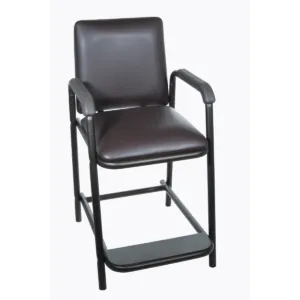
A hip high chair has an elevated seating position compared with many household chairs. It is designed for situations where a person needs a higher sitting surface.
Exact seat dimensions vary, so measure rather than choosing by the product name alone.
Why does seat height matter?
Seat height changes how far the person lowers the body when sitting and how the feet meet the floor. A seat that is too low may be difficult to rise from. A seat that is too high may leave the feet without comfortable support.
The correct height depends on leg length, footwear, movement restrictions and the person’s transfer technique.
What should you know about seat depth?
Seat depth is the distance from the backrest to the front edge of the seat. If it is too deep for the user, the person may have difficulty sitting with the back supported while keeping the knees in a comfortable position.
If it is too shallow, the thighs may have less support. Compare the product dimensions with the user.
Why do armrests matter?
Armrests can provide a place for the hands when the person sits or stands if the chair is designed for that use. Their height and distance apart should suit the user’s body.
The arms should feel stable and should not require the person to reach too far sideways.
What is different about a patient recliner?
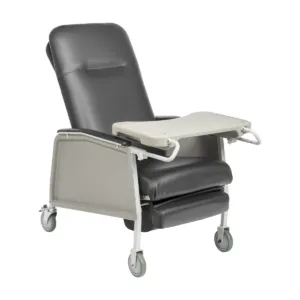
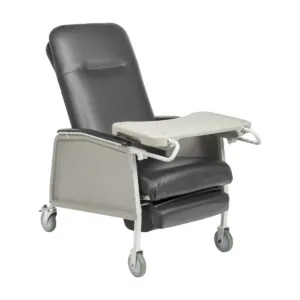
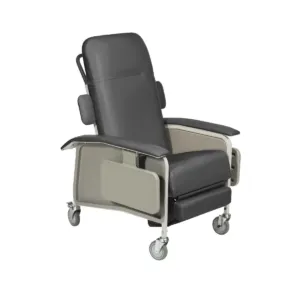
A patient recliner is designed for home care or care settings and may include reclining positions, supportive arms and other features. Some have casters or caregiver controls.
Features vary widely. Check whether the recliner is intended to be moved while occupied and follow the product instructions.
Does a soft chair make standing harder?
Very soft cushions can allow the body to sink farther into the chair. That changes the effective seat height and may make movement feel different.
A firmer supportive seat may be easier for some people, but chair choice should follow individual needs rather than a general rule.
How much room does a recliner need?
Measure the chair both upright and in its reclined position. The back may move toward the wall and the foot section may extend into the room.
Make sure the moving parts will not hit a table, bed or other furniture. Keep the movement area clear.
What about casters?
Some care recliners have wheels. Learn how the wheel locks work and when they should be engaged.
A wheeled chair should not move unexpectedly during sitting or standing. Follow the manufacturer’s instructions for positioning and locking.
What mistakes are common?
- Choosing chair height without considering the user’s leg length.
- Ignoring seat depth.
- Using a very soft household chair simply because it feels comfortable at first.
- Placing a recliner where its moving parts hit furniture.
- Failing to lock casters when the instructions require it.
- Adding loose cushions that change the fitted seat height.
What should you compare before buying?
Check seat height, seat depth, seat width, armrest height, weight capacity and overall chair dimensions. For a recliner, check its full dimensions when extended and the way the reclining controls operate.
If the chair is part of a recovery or transfer plan, confirm the setup with the person’s clinician.
If you are unsure which chair dimensions matter most, call an Avante Shop specialist for help.
Questions people ask
Is a higher chair always easier to stand from?
Not always. The seat height needs to fit the person's leg length, feet and transfer technique.
Why does seat depth matter?
A seat that is too deep or too shallow can affect how the person's back and legs are supported.
Can I add a cushion to make a chair higher?
Adding a loose cushion changes stability and fit. Ask a therapist if a different seat height is needed.
How much room does a recliner need?
Measure the chair in both upright and fully extended positions and keep the moving area clear.
This guide is general product information, not medical advice. If you are unsure what is right, speak to your doctor, nurse or therapist.