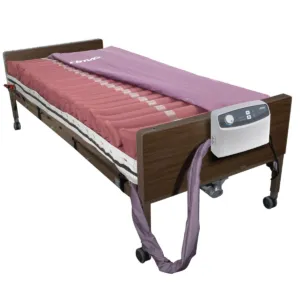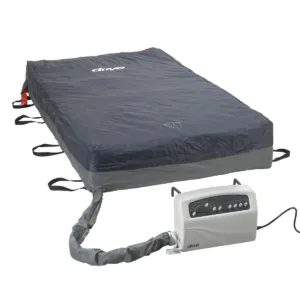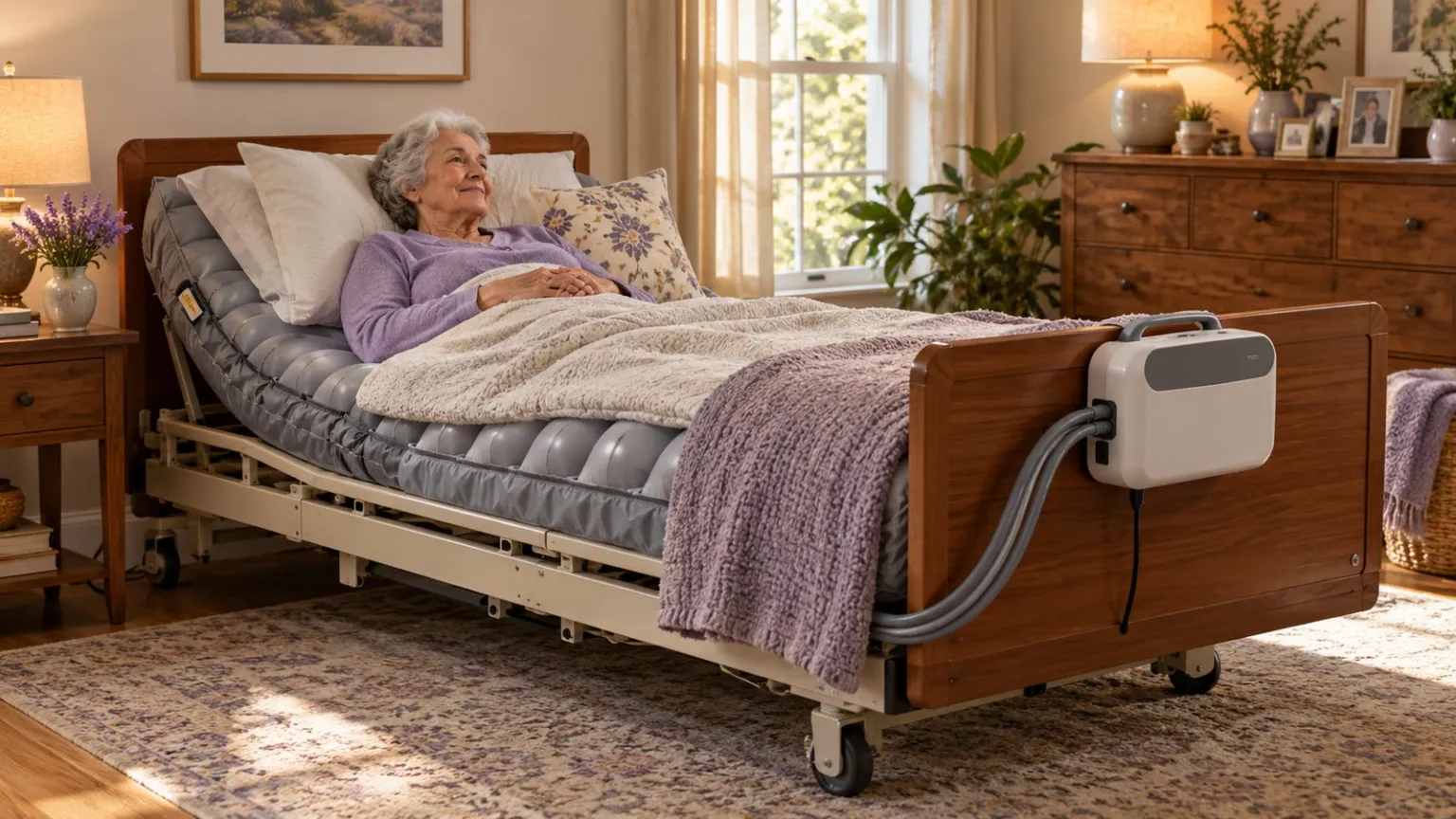
The short answer
- An overlay sits on top of another mattress, while a replacement surface takes the place of the existing mattress.
- Some powered systems change air pressure in different sections of the surface.
- Selection should follow the user's clinical care plan and equipment requirements.
Pressure support surfaces are designed to change how a person’s body is supported while lying in bed. Some are made from foam. Others use air cells connected to a pump. An alternating pressure system changes pressure in groups of air cells according to its operating cycle.
These products should be chosen as part of the person’s care plan. A doctor, nurse or other qualified clinician should decide what type of support surface is appropriate for an individual’s skin condition, mobility and medical needs.
What is an alternating pressure surface?
An alternating pressure surface contains air cells that are inflated and deflated in a controlled pattern by a pump. The person continues to lie on the surface while the distribution of support changes.
Systems vary in cell design, controls, pump features and intended use. Do not assume that all powered air surfaces work the same way.
What is a mattress overlay?
An overlay is placed on top of an existing mattress. The underlying mattress remains part of the bed setup.
Before using an overlay, check whether the existing mattress is suitable and whether the total height of the sleeping surface works safely with the bed rails and other equipment.
Follow the manufacturer’s requirements for the type of mattress that may be used underneath.
What is a mattress replacement?
A mattress replacement is designed to take the place of the existing mattress on a compatible bed frame. It may contain foam, air cells or a combination of materials.
Check the required bed deck dimensions and the type of frame for which the surface is intended. The mattress should fit the bed without unsupported gaps.
What does the pump do?
Powered air systems use a pump or control unit to maintain and adjust air pressure. Some controls are set according to instructions related to the user’s weight or another prescribed setting.
Use only the settings described in the product instructions or directed by the person’s clinician. Do not make treatment decisions by changing pressure settings without guidance.
What happens if the power goes out?
How a powered surface behaves without electricity depends on the design. Some retain air for a period, while others may change more quickly.
Read the instructions for power loss and emergency planning before the system is needed. Caregivers should know what the manufacturer recommends if the pump stops or an alarm sounds.
What should you know about alarms?
Some control units include alarms for low pressure, power problems or other operating conditions. Learn what each indicator means from the instruction manual.
Do not silence or ignore an alarm without checking its cause. If the problem cannot be resolved using the manufacturer’s instructions, contact the equipment supplier or clinician responsible for the setup.
Does the mattress need a special cover?
Support surfaces often include a fitted cover designed to work with the internal materials. Use the cover specified for the product.
Check cleaning instructions carefully. Some covers can be wiped down, while others have different care requirements. Do not add thick layers or improvised padding that the manufacturer does not recommend because they can change how the surface works.
What about bed rails?
Changing mattress thickness can change the relationship between the mattress surface and a bed rail. Gaps and rail height need to be considered as part of the complete bed setup.
Use compatible bed components and follow the bed and mattress instructions. A clinician or equipment specialist can help when several components are being combined.
What mistakes are common?
- Choosing a support surface without involving the person’s clinician.
- Putting an overlay on an unsuitable mattress.
- Using the wrong pump settings.
- Ignoring alarms or loose air hoses.
- Adding thick bedding that is not recommended for the surface.
- Failing to check how mattress height affects bed rails.
What should you check before buying?
Confirm whether the care plan calls for an overlay or replacement mattress. Check bed dimensions, weight capacity, pump requirements, power connection, cover care and any compatible bed frame requirements.
If a powered system is being considered, make sure the caregiver understands the controls and alarms before regular use.
If you are unsure which support surface matches the prescribed setup, call an Avante Shop specialist for help.
Questions people ask
Is an overlay the same as a replacement mattress?
No. An overlay sits on another mattress. A replacement surface takes the place of the existing mattress.
Do alternating pressure mattresses need electricity?
Powered alternating systems use a pump that requires power. Check the instructions for the specific system.
Can I change the pressure setting myself?
Use the setting method provided by the manufacturer and the person's clinician. Do not change care settings without guidance.
Can I put extra padding on top?
Use only layers and covers allowed by the product instructions because additional padding can change how the surface performs.
This guide is general product information, not medical advice. If you are unsure what is right, speak to your doctor, nurse or therapist.