The short answer
- Start with the discharge instructions and equipment recommended by the care team.
- Check the bedroom, bathroom and main walking route before equipment arrives.
- Confirm measurements, delivery access and who will help with setup.
Coming home after a hospital stay often means the person’s normal routine has changed. Walking, bathing, getting in and out of bed or using the toilet may require equipment that was not needed before.
The best starting point is the discharge plan. Ask the hospital team which equipment is recommended and which items need professional fitting or training. Do not buy a long list of products simply because they are commonly used after a hospital stay.
What should you ask before leaving the hospital?
Ask for the names or types of equipment the care team recommends. Clarify whether measurements or specific features are required.
If the person has been taught to use a walker, wheelchair, transfer device or other equipment, make sure the family understands the basic setup and who to contact with questions.
Check the route into the home
Look at the entrance before the person arrives. Note steps, thresholds, narrow doors and the distance from the vehicle to the main living area.
If a wheelchair or walker will be used, measure doorways and make sure the route is clear enough for the device.
What may be needed in the bedroom?
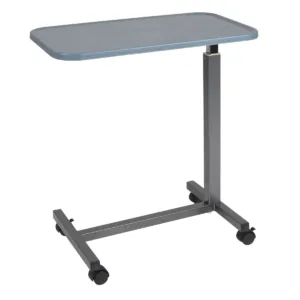
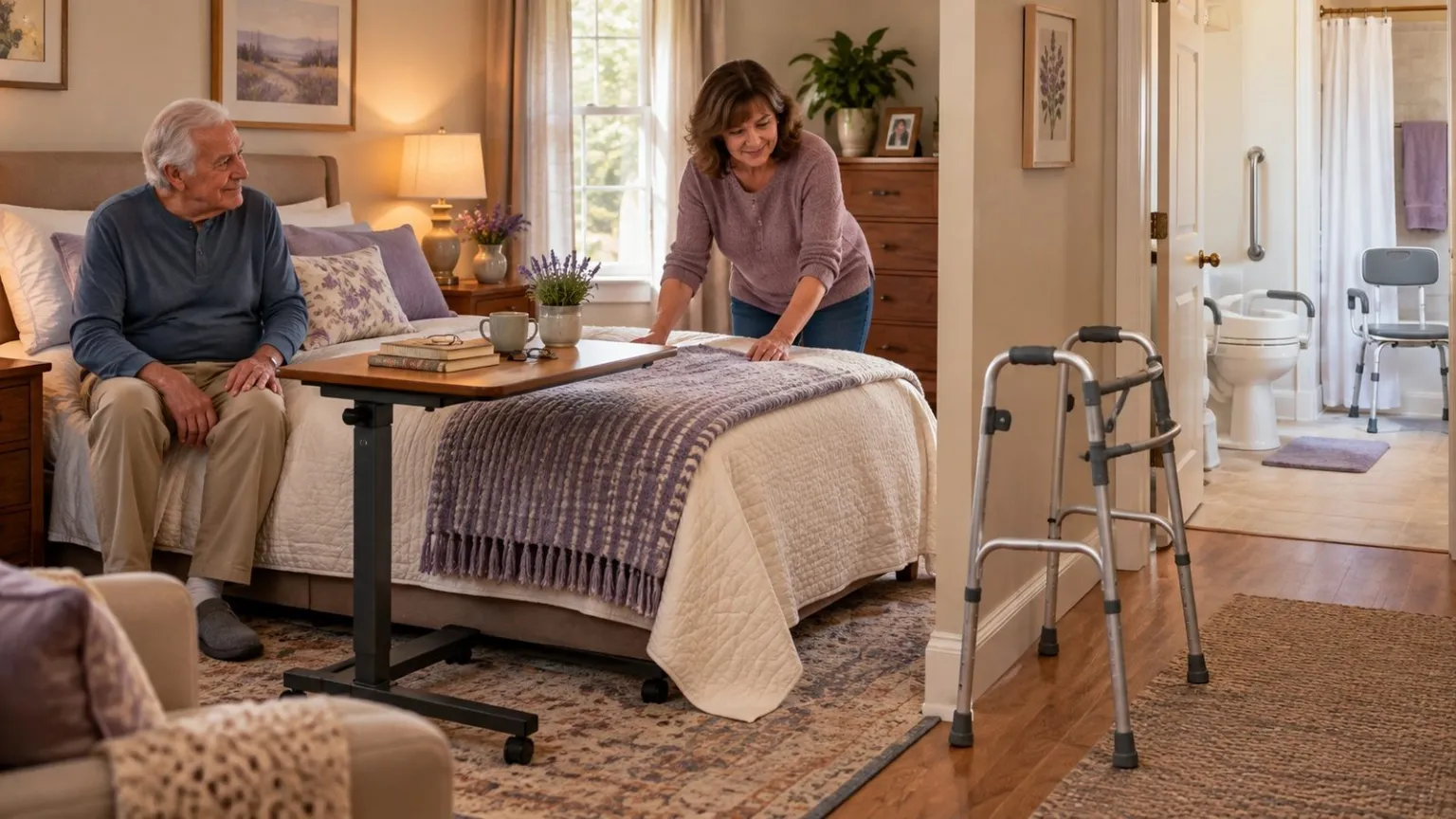
The answer depends on the person’s care plan. Some people may need bed rails or assist handles, an overbed table or a homecare bed. Others may only need room around the existing bed for a walker.
If a homecare bed or support mattress is prescribed, confirm the room dimensions, electrical access and delivery path.
Bed rails and assist devices require careful compatibility checks because mattress height, bed design and gaps matter.
What may be needed in the bathroom?
Bathroom equipment can include a shower chair, transfer bench, raised toilet seat, toilet safety frame, grab bars or handheld shower spray.
Choose only what addresses the person’s actual difficulty. Measure the tub, shower and toilet area before buying.
An occupational therapist can be particularly helpful because bathroom equipment needs to work with the person’s transfer technique and the room layout.
What if the person cannot reach the bathroom easily?
A bedside commode may be recommended when reaching the bathroom is difficult. Standard, drop arm and higher capacity designs are available.
Placement should leave enough space for the person and caregiver to approach safely. Follow the clinician’s instructions for transfers.
What about mobility equipment?
If a walker, rollator, cane or wheelchair has been recommended, check the fit before regular use. Handle height, seat dimensions, brakes and weight capacity matter.
Do not substitute a different mobility aid simply because one is already available at home. The level of support may not be the same.
Will a patient lift be needed?
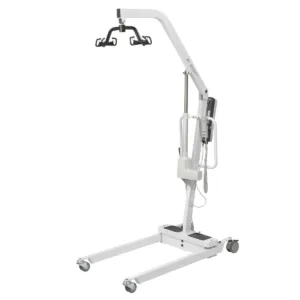
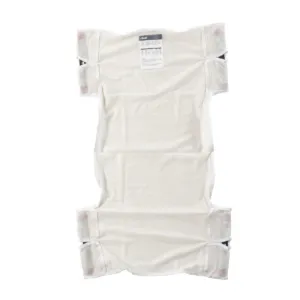
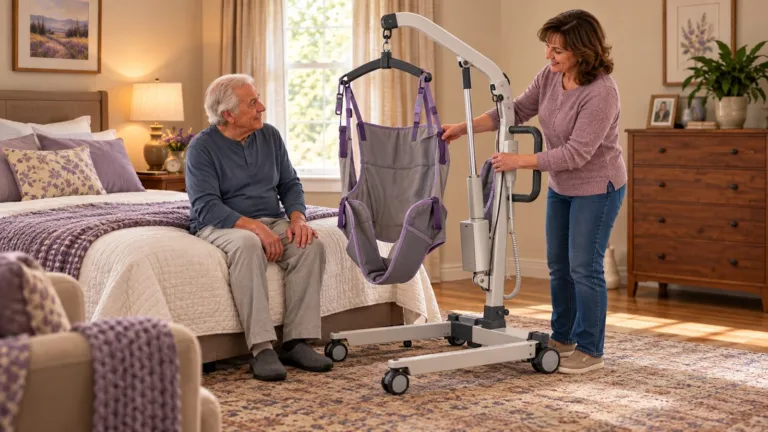
Patient lifts and slings are specialized transfer equipment. If one has been recommended, the caregiver should receive training on the exact lift and sling setup.
Lift type, sling style, weight capacity and attachment points all need to match. Do not improvise a lift setup from general instructions.
What should you remove or rearrange?
Make the main route through the home as clear as practical. Move loose clutter and furniture that blocks the path. Consider whether rugs interfere with walkers or wheelchairs.
Keep everyday items within practical reach so the person does not need to make unnecessary trips or stretch awkwardly.
What mistakes are common?
- Buying equipment before reading the discharge recommendations.
- Assuming an old walker or wheelchair already in the home will fit.
- Ordering bathroom equipment without measuring.
- Forgetting to check whether large equipment can pass through the doorway.
- Setting up a patient lift without caregiver training.
- Adding several devices that make a small room harder to move through.
Make a simple room by room list
Write down what the person needs to do in the bedroom, bathroom, living area and entrance. Match equipment to those tasks.
Keep instructions for powered or adjustable equipment nearby and know who to contact if something does not fit or work as expected.
If you are unsure which home equipment belongs on your list, call an Avante Shop specialist for help.
Questions people ask
Should I buy equipment before the person leaves the hospital?
Use the discharge team's recommendations so you know which equipment and measurements are actually needed.
Can we use a walker we already have?
Only if it is the appropriate type, fits the person and is in good condition. Check with the person's therapist if uncertain.
What rooms should I measure?
Focus on the entrance, bedroom, bathroom and the main route between them.
Who can help plan bathroom equipment?
An occupational therapist can assess both the person's transfer needs and the bathroom layout.
This guide is general product information, not medical advice. If you are unsure what is right, speak to your doctor, nurse or therapist.